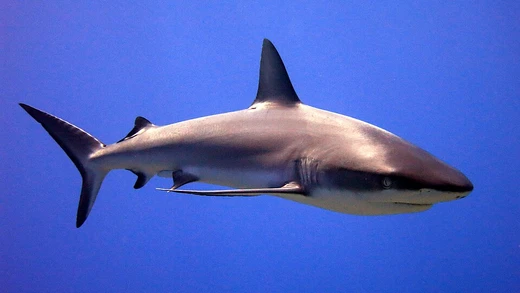
Basking shark
Second-largest fish; harmless filter feeder of temperate oceans.

Ian Andrews · CC BY-SA 2.0
The basking shark (Cetorhinus maximus) is the second-largest living shark and fish, after the whale shark. It is one of three plankton-eating shark species, along with the whale shark and megamouth shark. A slow-moving filter feeder, its common name derives from its habit of feeding at the surface, appearing to be basking in the warmer water there. Despite its large size and threatening appearance, the basking shark is not aggressive and is harmless to humans.
- length
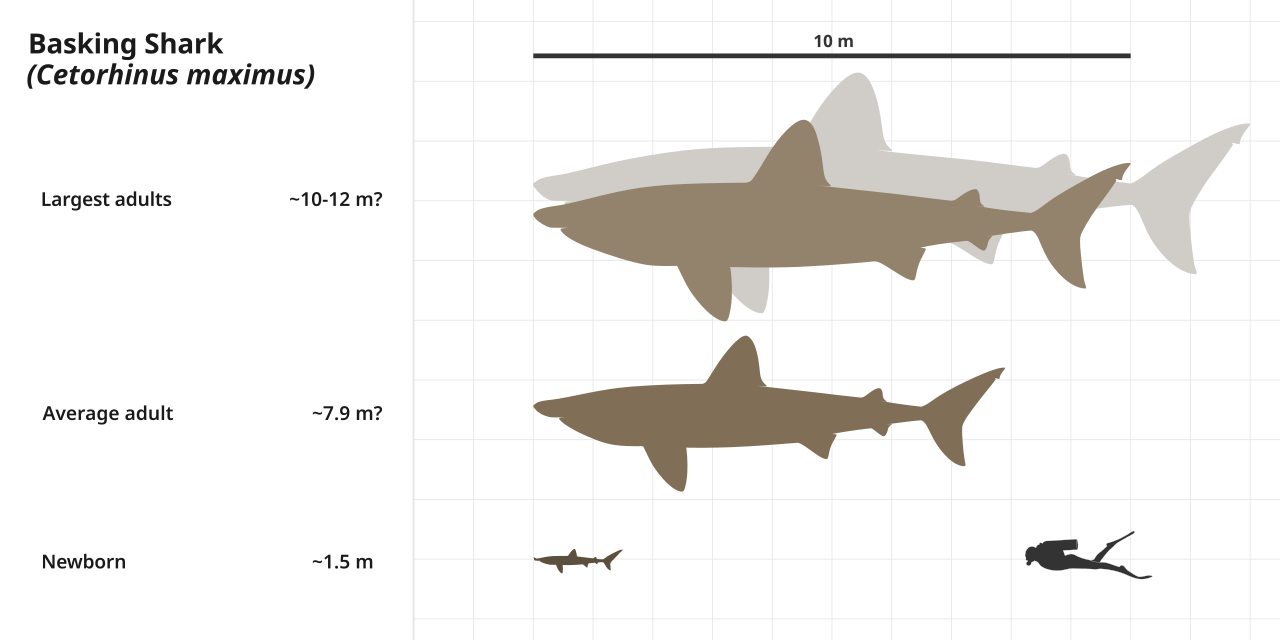
- Typically 7.9 m (26 ft), but large individuals can exceed 10 m (33 ft)
- weight
- Average adult about 4.65 t (4.58 long tons; 5.13 short tons)
- diet
- Plankton (filter feeder)
- conservation
- Overexploited; populations reduced, some disappeared, others need protection
- family
- Cetorhinidae (only extant member), order Lamniformes
Lore & Background
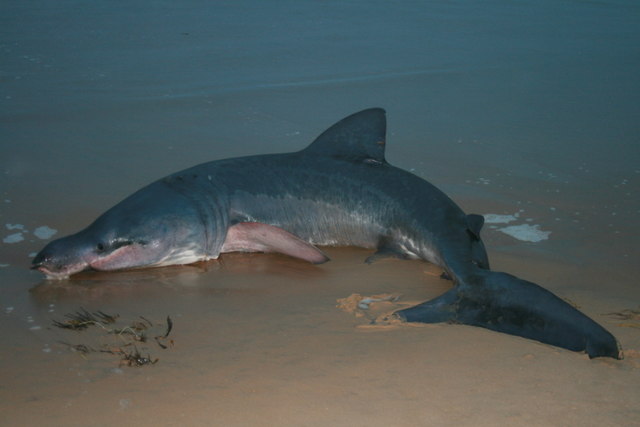
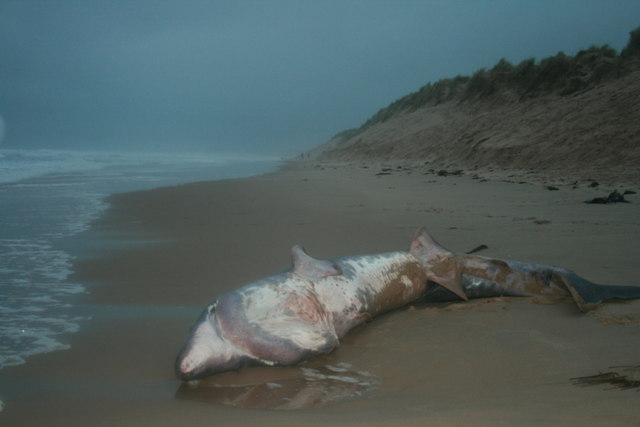
The basking shark is a cosmopolitan migratory species found in all the world's temperate oceans. It is usually greyish-brown with mottled skin, and the inside of the mouth is white. Its snout is conical, and its gill slits extend around the top and bottom of its head. The gill rakers, dark and bristle-like, catch plankton as water filters through the mouth and over the gills. The teeth are numerous, often 100 per row, very small, with a single conical cusp curved backwards. This species has the smallest weight-for-weight brain size of any shark, reflecting its relatively passive lifestyle. Basking sharks have been shown from satellite tracking to overwinter in both continental shelf and deeper waters. They may be found either in small shoals or alone. They do not hibernate and are active year-round. They shed and renew their gill rakers in an ongoing process. The basking shark has long been a commercially important fish as a source of food, shark fin, animal feed, and shark liver oil. Overexploitation has reduced its populations to the point where some have disappeared and others need protection. On several occasions, decomposing basking shark remains were the most likely explanations for 'globsters,' such as the Stronsay Beast and the Zuiyo-maru case.
Reader's Guide
The basking shark is significant as the second-largest extant fish and one of only three plankton-eating shark species. Its filter-feeding adaptations—including a greatly enlarged mouth, highly developed gill rakers, and numerous small teeth—illustrate a specialized ecological niche. The species has the smallest brain-to-body-weight ratio of any shark, correlating with its passive lifestyle. Historically, it was commercially important for food, fin, animal feed, and liver oil, leading to overexploitation and population declines. The basking shark's taxonomy includes the only extant member of the family Cetorhinidae, with the oldest known relatives from the middle Eocene. Its appearance has led to misidentification with great white sharks, but it is harmless to humans. Decomposing remains have been mistaken for sea monsters, highlighting its role in marine folklore. Conservation concerns remain due to past overfishing.
Did You Know?
- The basking shark has the smallest weight-for-weight brain size of any shark.
- It can breach, jumping entirely out of the water, possibly to dislodge parasites.
- The species name 'maximus' is from Latin and means 'greatest'.
Physical Form & Filter-Feeding Anatomy
The basking shark ranks as the second-largest living fish on Earth, trailing only the whale shark in sheer bulk. Its body follows the classic lamniform shark plan, yet several features set it apart. The most striking is the cavernous mouth, which can span up to a metre in width, paired with gill slits so long they nearly encircle the entire head. Inside, dark, bristle-like gill rakers form an efficient sieve that traps plankton as water flows over the gills. The teeth, numbering around a hundred per row, are tiny—just five to six millimetres—conical, and hooked backward, serving little purpose in feeding. The caudal peduncle bears a pronounced lateral keel, and the tail fin takes a crescent shape. Skin is covered in textured placoid scales beneath a mucus layer, and colouration ranges from dark brown or blue on the back to a dull white belly. Notably, this species possesses the smallest brain relative to body weight of any shark, a reflection of its slow, passive existence.
Range, Migration & Habitat
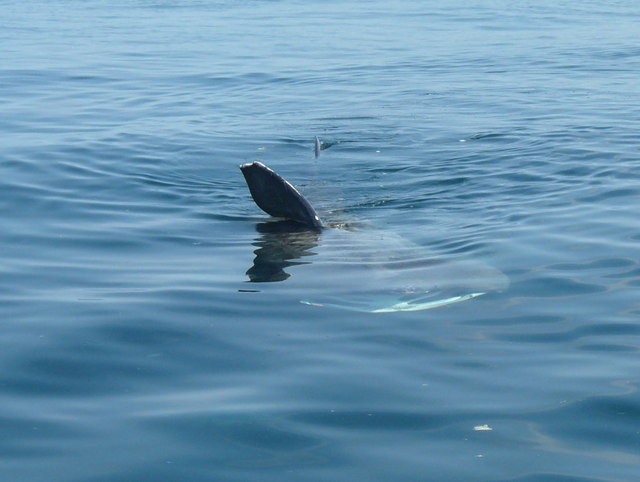
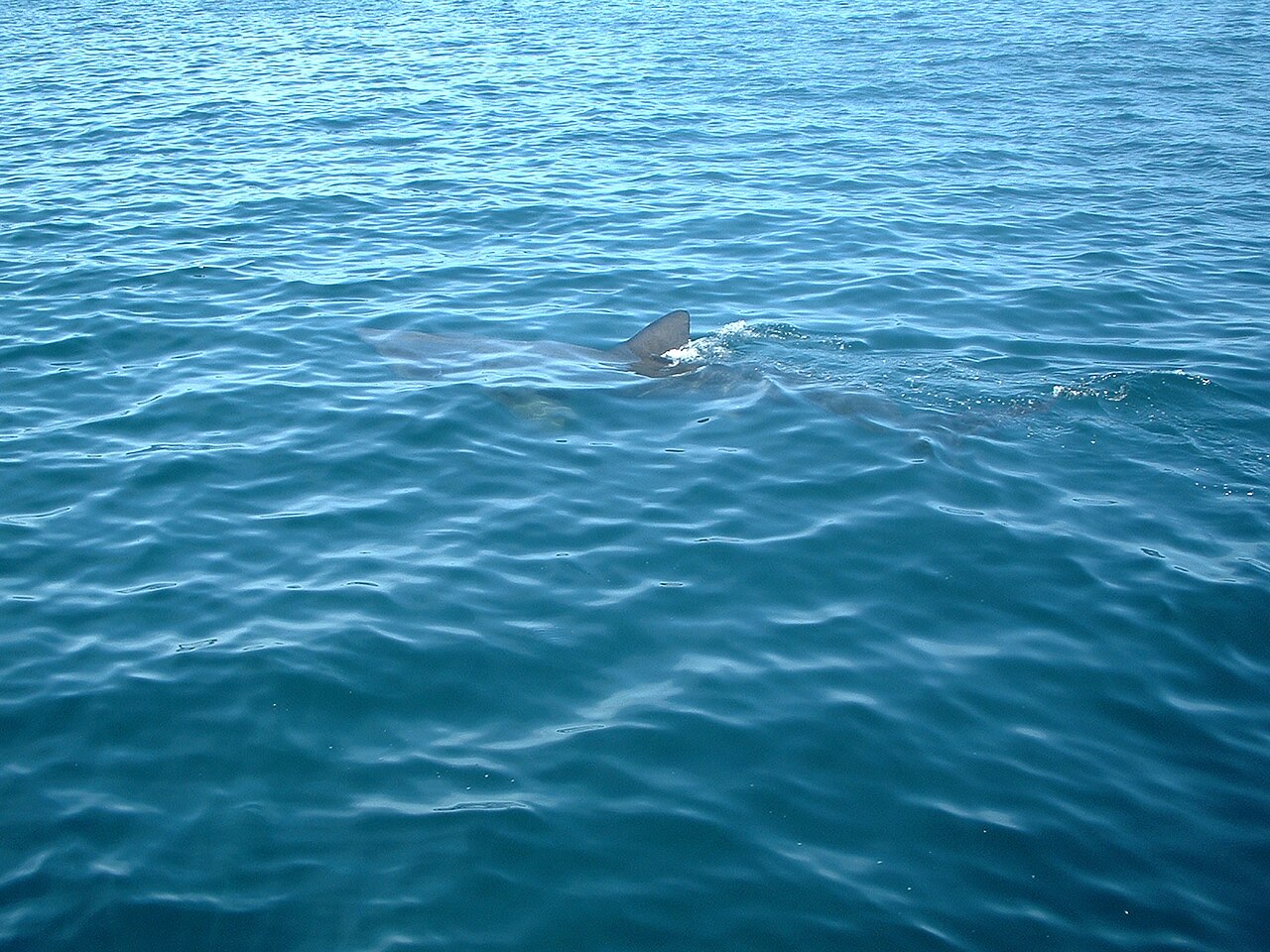
The basking shark is a truly cosmopolitan species, ranging across every temperate ocean on the planet. It inhabits boreal through warm-temperate waters, typically lingering around continental shelves and occasionally venturing into brackish coastal bays with narrow openings. Temperature preference clusters between 8 and 14.5 degrees Celsius, yet individuals have been documented crossing the much warmer equatorial belt. Because the shark tracks concentrations of plankton through the water column, it frequently rises to the surface to feed, a behaviour that gives the species its common name. Seasonal migration is a defining feature of its life cycle; satellite tracking has revealed that during the colder months the sharks overwinter either on the continental shelf at depths under 200 metres or in considerably deeper waters. Socially, basking sharks are flexible: they may travel in small shoals or drift entirely alone. Despite their enormous size and somewhat intimidating silhouette, they are not aggressive and pose no threat to humans.
Taxonomy & Evolutionary History
The basking shark stands alone as the sole surviving member of the family Cetorhinidae, nested within the mackerel shark order Lamniformes. The species was first formally described by Johan Ernst Gunnerus from a specimen recovered in Norway. The genus name is believed to derive from the Greek ketos, meaning a marine monster or whale, combined with rhine, an obscure ancient Greek word for shark, while the species epithet maximus simply means greatest in Latin. Over the centuries, numerous other names were proposed by various naturalists, including Squalus isodus, Squalus elephas, and Cetorhinus blainvillei, none of which stuck. In Orkney, local fishermen call it the hoe-mother, a contraction meaning the mother of the piked dogfish. Its evolutionary lineage stretches far back: the oldest known relatives belong to the extinct genus Keasius, found in middle Eocene deposits from Antarctica, Oregon, and possibly Russia. Members of the modern genus Cetorhinus first appear in the Miocene, with the present species emerging in the Late Miocene. A Late Triassic European form, Pseudocetorhinus, has been tentatively linked to the family, though that association remains doubtful.
Human Exploitation & Conservation
For generations, the basking shark has been a commercially valuable catch, harvested for its flesh as food, its fins, its use in animal feed, and its liver oil. This sustained pressure has taken a severe toll: populations have declined to the point where some regional groups have vanished entirely, while others now require formal protection. The species carries a long list of common names—bone shark, elephant shark, sailfish, sunfish—reflecting the varied cultural contexts in which it has been encountered. Despite its fearsome bulk and the cavernous gape that can be mistaken for a great white's, the basking shark is entirely harmless to people; it is a slow-moving filter feeder with no predatory intent. Modern satellite tagging has added valuable data to conservation efforts, confirming that the sharks spend the winter months either on shallow continental shelves or in much deeper offshore waters. Their seasonal, plankton-following migrations make them visible to coastal communities, and their presence at the surface—apparently basking in the warmer upper layers of the ocean—remains one of the most memorable marine spectacles in temperate seas worldwide.
Common Misconceptions (Editorial)
Some people believe basking sharks are aggressive or dangerous due to their large size and mouth structure, but the facts show they are harmless, non-aggressive filter feeders that eat only plankton. Another common misconception is that basking sharks hibernate in winter; in reality, they are active year-round and do not hibernate. Additionally, while some may think the species is named for its massive size, its common name actually comes from its habit of feeding at the surface, appearing to bask in the sun.
Why It Matters (Editorial)
The basking shark endures in public imagination partly because of its paradoxical nature—a giant, daunting creature that poses no threat and drifts peacefully through the oceans. Its long history of overexploitation and dramatic population declines also serve as a sobering reminder of how human demand can devastate even the largest marine species, underscoring the ongoing need for conservation and protection.
Gallery

Frequently Asked Questions
Who is Basking shark?
The basking shark (Cetorhinus maximus) is the second-largest fish alive today, just behind the whale shark in overall size. It is the sole surviving member of the family Cetorhinidae and patrols temperate coastal seas across the globe.
What are Basking shark's powers/role?
It is a slow, gentle filter feeder that scoops up enormous volumes of plankton, frequently surfacing to feed in the warmer shallower water. That habit of hanging near the surface while feeding is what earned the species its 'basking' nickname.
How does Basking shark's story end?
Decades of commercial overfishing have driven many regional populations to collapse, and some local groups have vanished entirely. Surviving stocks still require active protection, and the species' long-term recovery remains uncertain.
Why is Basking shark important?
As one of only three shark species that feed on plankton, it occupies a unique ecological niche in temperate oceans by cycling vast quantities of microscopic life. Because it is the last of its family, losing it would mean the permanent extinction of an entire lineage.
Is Basking shark dangerous to humans?
Despite its imposing size—commonly around 8 metres and sometimes exceeding 10 metres—and its wide-open mouth, the basking shark is completely non-aggressive toward people. It simply drifts through the water filtering tiny organisms and poses no threat to swimmers or divers.
More in Sharks 1-22
Spotted an error? Know more?
This is a living reference — every entry is fact-audited, and reader corrections feed straight into our audit queue. Suggest an edit · See this site's audit record