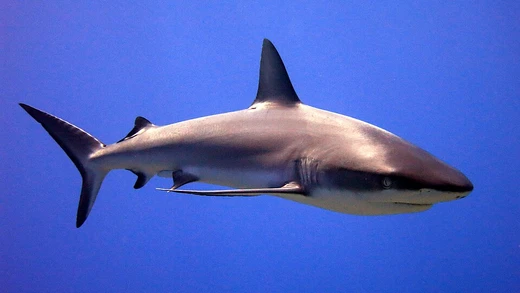
Great white shark
Large, partially warm-blooded shark with a fearsome public reputation.

DataBase Center for Life Science (DBCLS) · CC BY 4.0
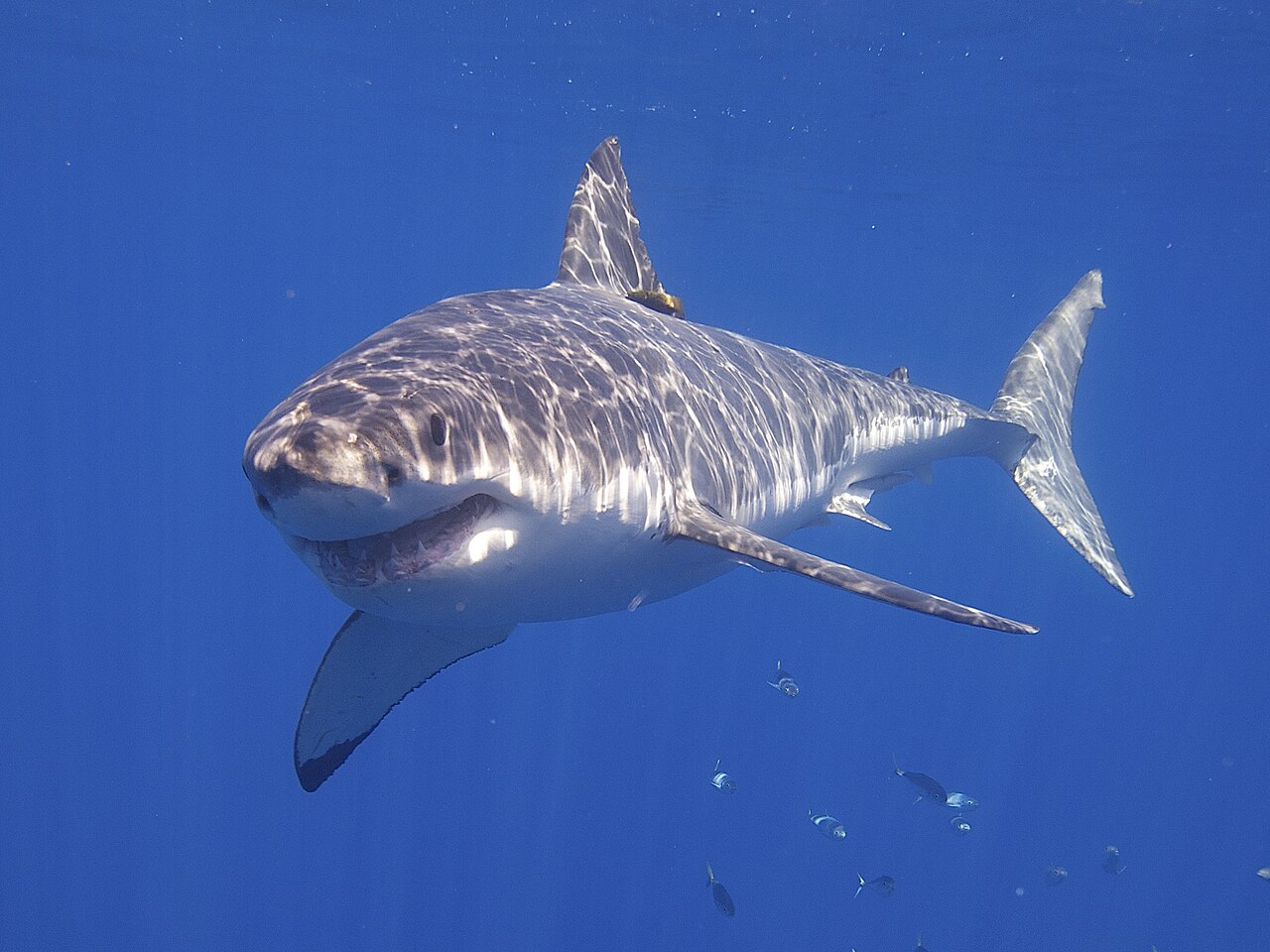
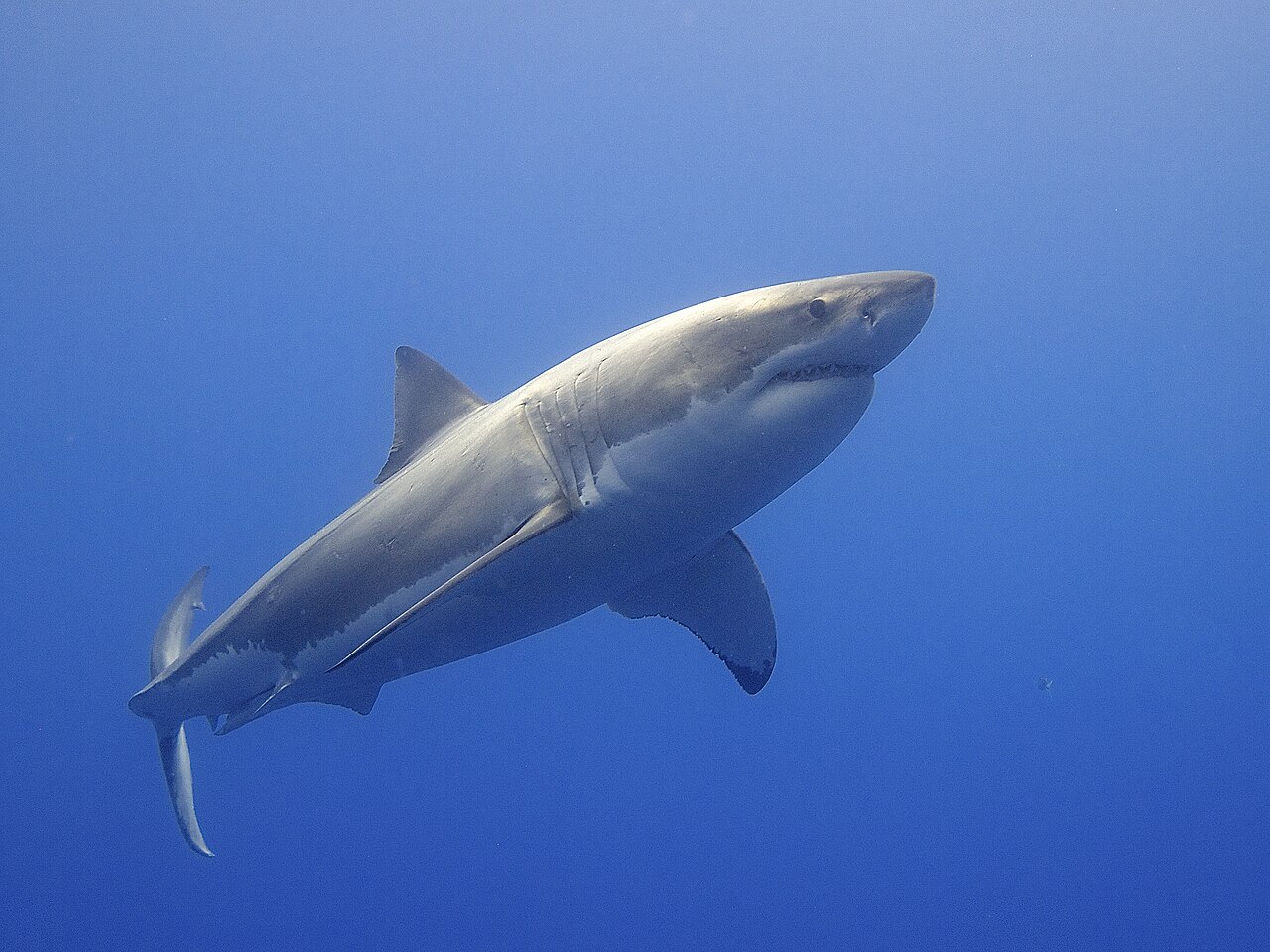
The great white shark (Carcharodon carcharias), also known as the white shark, white pointer, or great white, is a large shark species closely related to mako sharks, the porbeagle, and the salmon shark. The species is partially warm-blooded, allowing it to remain active in colder waters, and its massive fatty liver can exceed a quarter of its body weight, providing buoyancy and energy storage.
- Scientific name
- Carcharodon carcharias
- Family
- Lamnidae
- Order
- Lamniformes (mackerel sharks)
- Conservation status
- Vulnerable globally; critically endangered in European and Mediterranean waters
- Maximum size
- One of the largest living fish, but smaller than whale shark and basking shark
Lore & Background
The white shark inhabits tropical and temperate oceans worldwide, near coasts and in open ocean, with populations concentrated off North America's Pacific and Atlantic coasts, southern Africa, and Oceania. It is highly migratory, traveling between coast and open ocean and even between continents. It preys on marine mammals such as seals and dolphins, as well as squid and fish including other sharks, and scavenges whale carcasses. Though normally an apex predator, it is sometimes preyed on by orcas. White sharks are generally solitary but may gather at feeding sites, communicating and establishing dominance hierarchies with body language. They reproduce with pups hatching from eggs inside the female before being born live; juveniles inhabit shallower water and feed on smaller prey.
Reader's Guide
In reality, white sharks normally do not prey on humans, and most bites result from curiosity or mistaken identity. The species has attracted tourism through aggregations viewed from boats or shark cages. The International Union for Conservation of Nature lists it as vulnerable globally and critically endangered in European and Mediterranean waters. Major threats include accidental catching by commercial fisheries, recreational fishing, and entanglement in protective nets near beaches. Several governments have enacted protections, including bans on catching and killing the species. Its scientific name Carcharodon carcharias derives from Greek words for 'sharp tooth' and 'shark'. The white shark first appears in the fossil record around 6–5 million years ago in the Pacific basin, descending from the extinct Carcharodon hastalis via the intermediate Carcharodon hubbelli.
Did You Know?
- The white shark's massive fatty liver can reach over a quarter of its body weight, providing buoyancy and storing energy.
- White sharks are partially warm-blooded, an adaptation that allows them to remain active in colder waters.
- The species is sometimes preyed on by orcas, despite normally being an apex predator.
- The scientific name Carcharodon carcharias combines Greek words meaning 'sharp tooth' and 'shark'.
Twelve Days of Carnage
The twelve days between July 1 and July 12, 1916, saw five separate shark attacks along New Jersey's coastline, claiming four lives and leaving one critically wounded. The context made the carnage feel almost inevitable: a brutal summer heat wave combined with a polio epidemic had pushed thousands of Americans toward the Jersey Shore's resort towns seeking relief. The first fatality came on a Saturday in Beach Haven, where a young Philadelphia man took a swim alongside his Chesapeake Bay Retriever and was struck within moments of entering the water. Five days later, a Swiss hotel bellhop swimming well offshore in Spring Lake suffered a far more devastating assault that turned the surrounding sea crimson. The final two days brought the most staggering events: three separate attacks in a single afternoon within Matawan Creek, an inland waterway bearing little resemblance to an ocean beach. Of all five victims, only a fourteen-year-old boy from New York City lived, rescued after a desperate struggle with the animal. The species responsible remains debated by scholars, with the great white and bull shark most commonly named.
The Matawan Creek Shock
Perhaps nothing in the 1916 sequence shocked the nation more than the Matawan Creek attacks. The creek, situated near Keyport and tucked inland behind Raritan Bay, looked more like a small Midwestern waterway than an oceanfront. The idea that a large predator could operate there seemed absurd to local residents. When a sea captain named Thomas Cottrell reported an eight-foot shark in the water, the town simply ignored him. On the afternoon of July 12, a cluster of boys, including eleven-year-old Lester Stillwell, were playing near a spot called Wyckoff Dock with a pet dog in the water. What they first mistook for a rotting log revealed a dorsal fin, and in an instant Stillwell was dragged beneath the surface. Nearby men, including twenty-four-year-old businessman Watson Stanley Fisher, dove in believing the boy had simply fainted. Fisher was struck by the same animal while trying to bring the boy back, losing Stillwell in the process and dying of blood loss hours later. Roughly thirty minutes after those deaths, fourteen-year-old Joseph Dunn was attacked half a mile away, his leg nearly swallowed before his brother and a friend hauled him free. Stillwell's body was not recovered until two days later, upstream from the dock.
Panic, Nets, and the Hunt
The deaths triggered what one scholar has called the most unprecedented shark panic in American history. The fear radiated outward from the Jersey Shore along the coasts of New York and New Jersey, carried by telephone, wireless telegraph, mailed letters, and postcards. What began as a localized tragedy quickly became a national emergency for the resort economies that depended on summer tourism. Communities launched aggressive hunts to eliminate what the press branded as man-eating predators, and several beach towns went so far as to enclose their public swimming areas with steel netting to keep swimmers safe. The episode also exposed how little genuine understanding of sharks existed before 1916. Prior scientific knowledge rested largely on conjecture and speculation rather than observation. Even the New York Times initially described the Beach Haven victim as having been bitten by a fish, presumably a shark, while a Pennsylvania fish commissioner suggested the animal had merely been hunting the boy's dog. The sheer scale and lethality of the attacks compelled ichthyologists to fundamentally rethink what sharks were capable of and how they actually behaved toward humans.
A Legacy Written in Ink and Broadcast
Within days of the first blood in the water, the Jersey Shore attacks had already become part of the American visual and narrative landscape. Editorial cartoons across the country began depicting sharks as grotesque symbols of lurking danger, a caricature that would persist in popular imagery for decades. The events proved endlessly revisitable for later generations of media producers. Yet even more than a century later, the scientific questions remain unresolved. Researchers continue to argue over whether a single great white, a single bull shark, or multiple animals of different species were responsible for the five attacks across twelve days. The 1916 events stand as a permanent reminder of how little humanity understood about these predators at the time, and how a single summer of violence can permanently reshape both public perception and the trajectory of marine biology.
Common Misconceptions (Editorial)
- Some people believe great white sharks are cold-blooded like most fish, but they are actually partially warm-blooded, which allows them to remain active in colder waters. - It is commonly thought that great white sharks are always apex predators with no natural enemies, but they are sometimes preyed on by orcas. - Many assume the species is the largest living fish, but it is smaller than both the whale shark and the basking shark.
Why It Matters (Editorial)
The great white shark endures in the public imagination as both a fearsome predator and a symbol of the ocean’s wild power. Its remarkable adaptations—such as partial warm-bloodedness and a liver that can weigh over a quarter of its body mass—highlight how evolution shapes creatures to thrive in challenging environments. As a vulnerable species facing threats from fishing and habitat loss, the white shark also serves as a critical reminder of the fragility of marine ecosystems and our responsibility to protect them.
Gallery
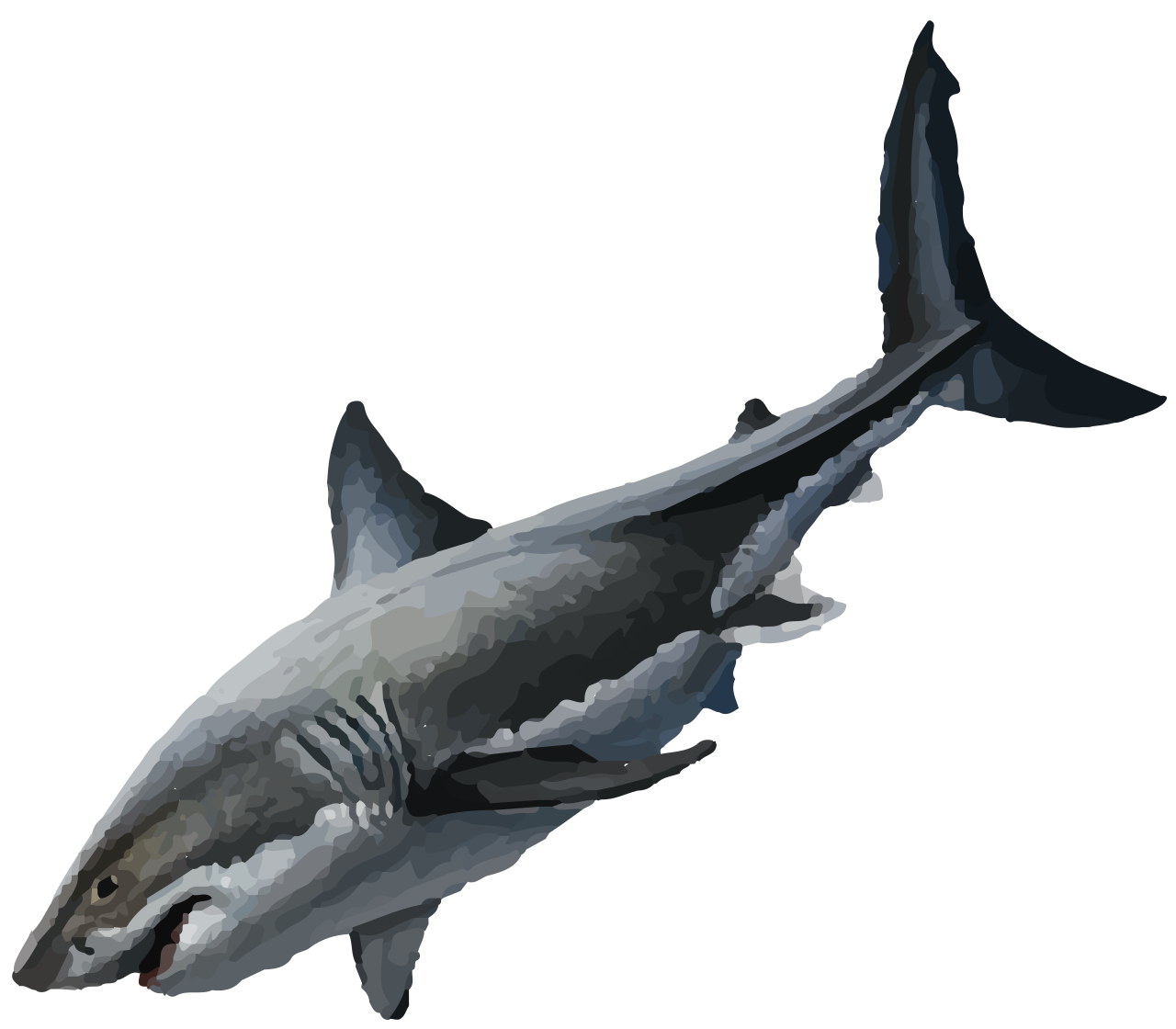

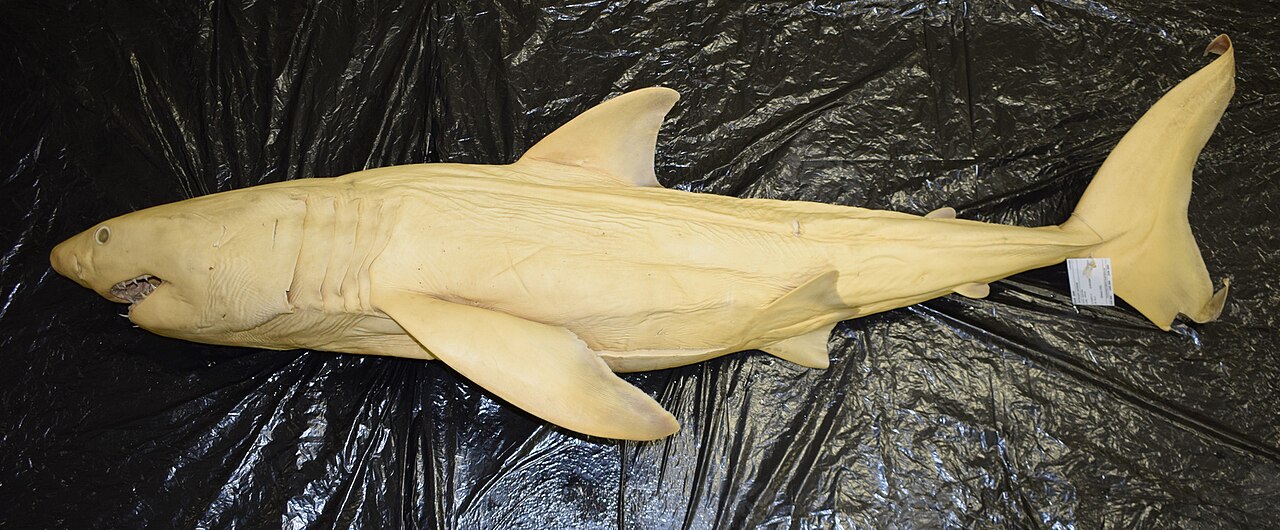
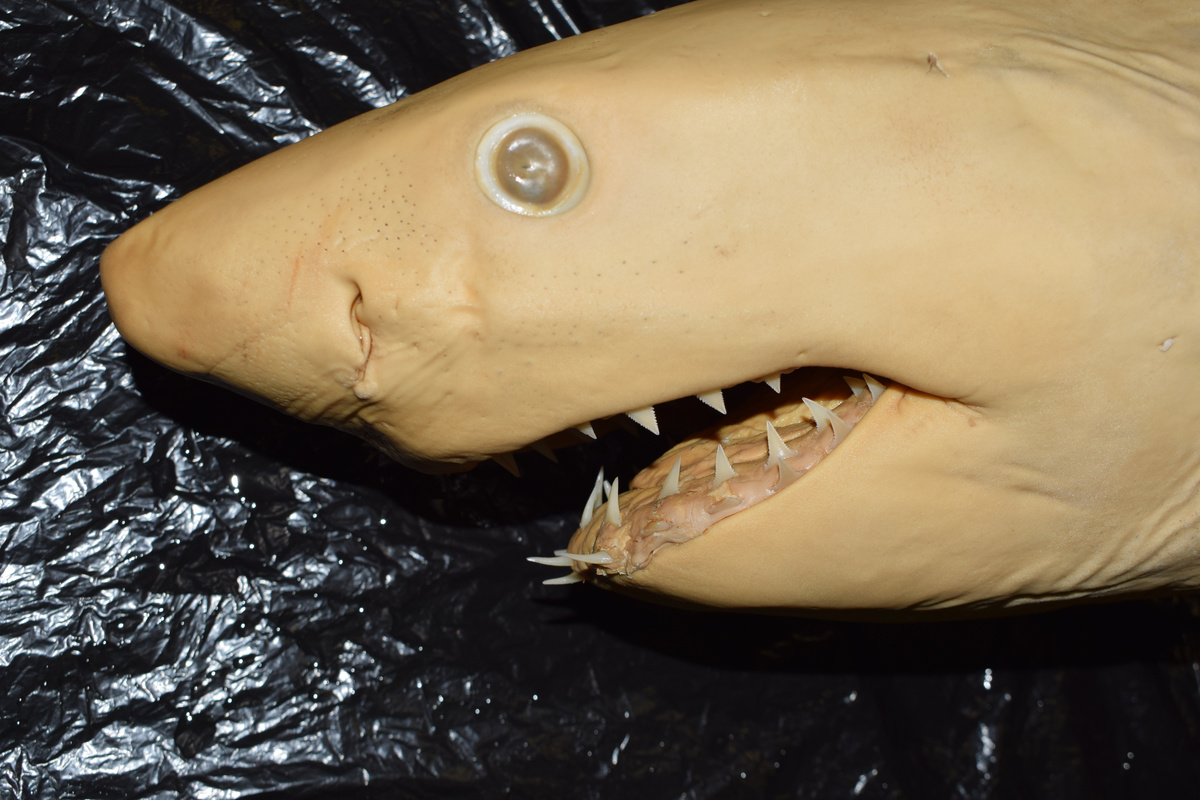
Frequently Asked Questions
How does Great white shark's story end?
There is no single finale; the species is currently listed as Vulnerable worldwide and Critically Endangered in European and Mediterranean waters, so its long-term trajectory still depends on ongoing conservation. For now, the story is one of a once-abundant predator whose numbers remain under serious human-driven pressure.
Why is Great white shark important?
As a top-tier marine predator, it helps keep prey populations in check and supports the overall balance of ocean food webs, making it ecologically irreplaceable. It is also one of the most studied and culturally iconic fish species, shaping both marine biology and public perception of the ocean.
What is Great white shark's family and lineage?
Great white shark sits in the order Lamniformes and family Lamnidae, making it a close relative of the mako sharks, porbeagle, and salmon shark. Linnaeus originally placed it under the genus Squalus before it was moved to its own genus, Carcharodon.
More in Sharks 1-22
Spotted an error? Know more?
This is a living reference — every entry is fact-audited, and reader corrections feed straight into our audit queue. Suggest an edit · See this site's audit record