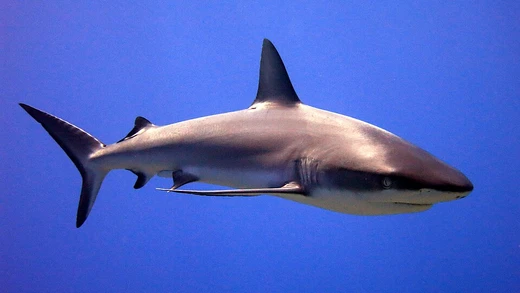
Nurse shark
A robust, bottom-dwelling shark vital to research.

Bernard DUPONT from FRANCE · CC BY-SA 2.0
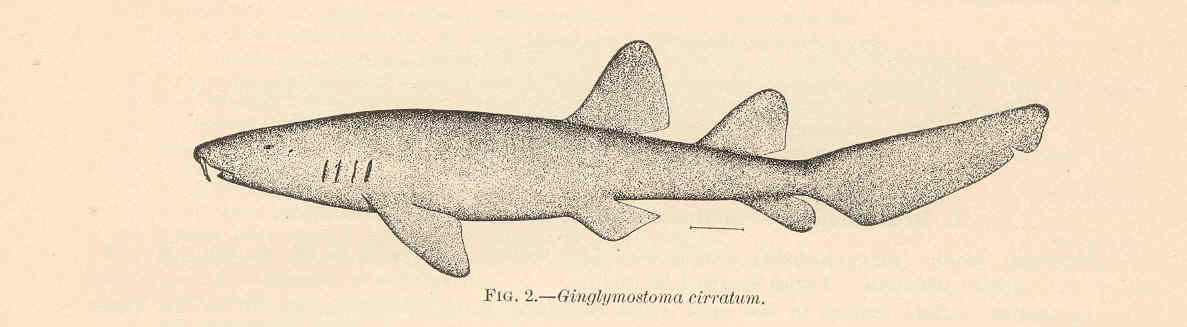
The nurse shark (Ginglymostoma cirratum) is an elasmobranch fish in the family Ginglymostomatidae. It is globally assessed as vulnerable on the IUCN List of Threatened Species, though considered least concern in the United States and The Bahamas, and near threatened in the western Atlantic Ocean due to its vulnerable status in South America and reported threats in Central America and the Caribbean. Nurse sharks are directly targeted in some fisheries and considered by-catch in others. They are an important species for shark research because they are robust and able to tolerate capture, handling, and tagging extremely well.
- Maximum adult length
- 3.08 m (10 ft 1+1⁄2 in)
- Newborn length
- about 30 cm
- Typical litter size
- 21–29 pups
- Gestation period
- six months
- Mating season
- late June to end of July
- Conservation status (global)
- vulnerable
- Feeding method
- obligate suction feeder
Lore & Background
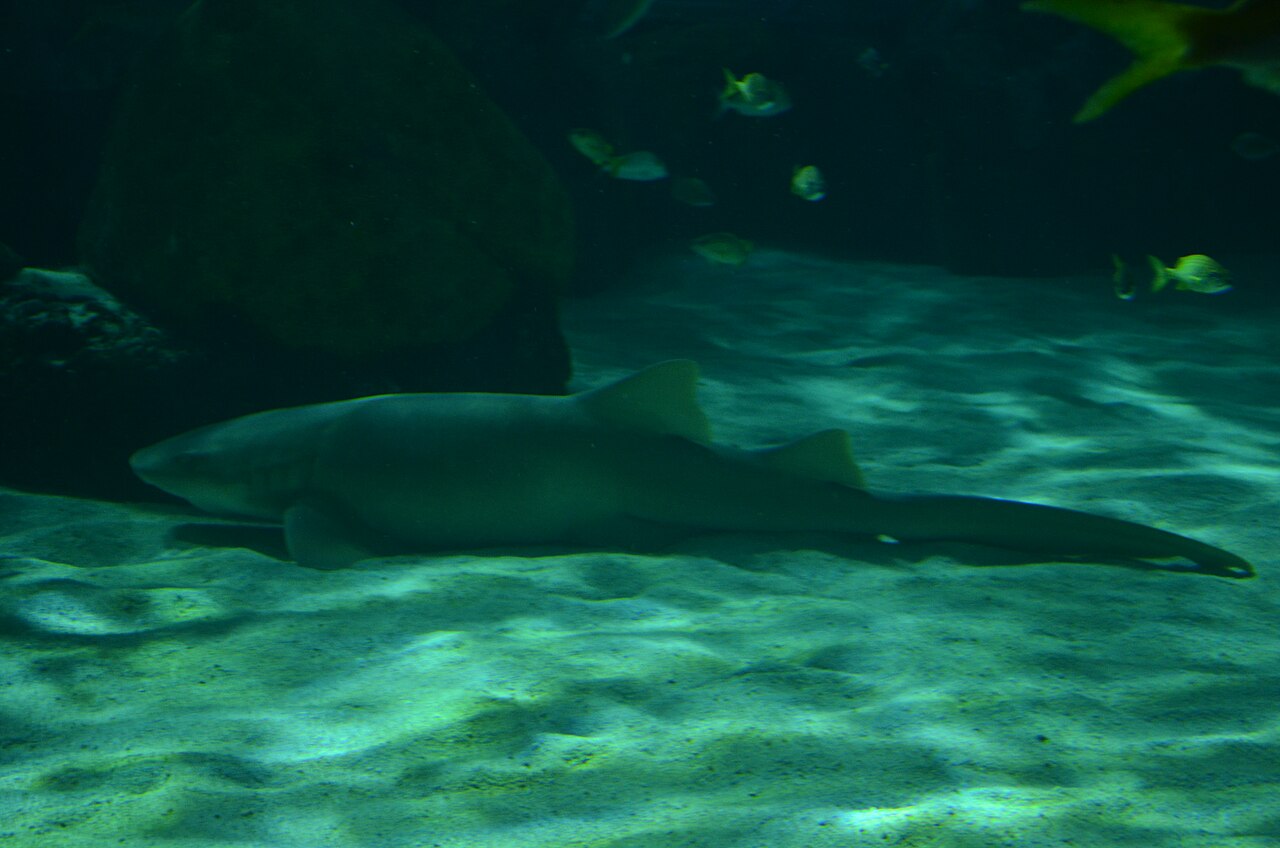
The name 'nurse shark' may have originated from antiquated spelling conventions, where the 'n' of 'an' was transferred to a following word beginning with a vowel, as 'huss', 'husse', and 'hurse' were old names for dogfish and other sharks. Another possibility is that the name comes from the nurse shark being ovoviviparous, as an observer watching a shark give birth to live young might have thought the shark was giving 'nurse'. The genus name Ginglymostoma is derived from Greek meaning 'hinged mouth', and the species name cirratum from Latin meaning 'having curled ringlets'. Nurse sharks are typically inshore, bottom-dwelling animals. Juveniles are mostly found on the bottom of shallow coral reefs, seagrass flats, and around mangrove islands, while older individuals reside in and around deeper reefs and rocky areas, seeking shelter in crevices and under ledges during the day and feeding on the seabed in shallower areas at night. They are solitary nocturnal predators but often form large sedentary groups during the day. They are obligate suction feeders, generating some of the highest suction forces recorded for any aquatic vertebrate, and can exhibit suck-and-spit behavior or shake their heads violently to reduce food size. Nurse sharks are ovoviviparous, with fertilized eggs hatching inside the female. The mating cycle is biennial, with females taking up to 18 months to produce a new batch of eggs. They engage in multiple paternity during mating season, promoting genetic variation. American alligators and American crocodiles may occasionally prey on nurse sharks in shared coastal habitats.
Reader's Guide
The nurse shark holds significance as a globally vulnerable species that faces direct targeting and by-catch in fisheries, particularly in South America, Central America, and the Caribbean. Its conservation status varies by region, highlighting the need for region-specific management. The species is also crucial for shark research due to its robustness and tolerance of capture, handling, and tagging, making it a model organism for studying elasmobranch biology. Its unique feeding mechanism as an obligate suction feeder with among the highest recorded suction forces in aquatic vertebrates provides insight into evolutionary adaptations. The nurse shark's strong site fidelity and mating-site fidelity, rare among sharks, make it valuable for studying reproductive behavior and population dynamics. Its ovoviviparous reproduction and multiple paternity contribute to genetic diversity. The historical uncertainty around its name—whether derived from antiquated spelling or from observations of live birth—adds a layer of cultural and linguistic interest. Overall, the nurse shark serves as both a conservation concern and a scientific resource, with its biology informing broader understanding of shark ecology and behavior.
Did You Know?
- The nurse shark is globally assessed as vulnerable on the IUCN List of Threatened Species, but is considered least concern in the United States and The Bahamas.
- Nurse sharks are obligate suction feeders capable of generating suction forces among the highest recorded for any aquatic vertebrate.
- They are one of the few shark species known to exhibit mating-site fidelity, returning to the same breeding grounds repeatedly.
- Newborn nurse sharks have a spotted coloration that fades with age, and are about 30 cm long at birth.
Taxonomy and the Enigma of the Common Name
The genus name Ginglymostoma draws from Greek roots translating to "hinged mouth," a descriptor that captures the distinctive jaw architecture of this elasmobranch. The species epithet cirratum, taken from Latin, means "having curled ringlets." Phylogenetically, Ginglymostoma is considered the sister genus of Nebrius, and both are placed within a clade that also includes the shorttail nurse shark, the whale shark, and the zebra shark—a grouping that highlights the remarkable morphological diversity this lineage has accumulated over deep evolutionary time. The everyday name "nurse" carries a more tangled etymological history. One theory, documented in the Oxford English Dictionary, traces it to medieval English spelling conventions, where the initial "n" of the article "an" would frequently migrate onto the following word that began with a vowel. In that period, huss, husse, and hurse served as common names for dogfish and other small sharks, and a straightforward phonetic shift could easily have yielded "nurse." A competing explanation, put forward by Lineaweaver and Backus in their natural history volume, proposes that an early observer watched a female delivering live young and assumed she was "giving nurse," a period colloquialism for nursing offspring.
A Patchwork of Tropical Shores
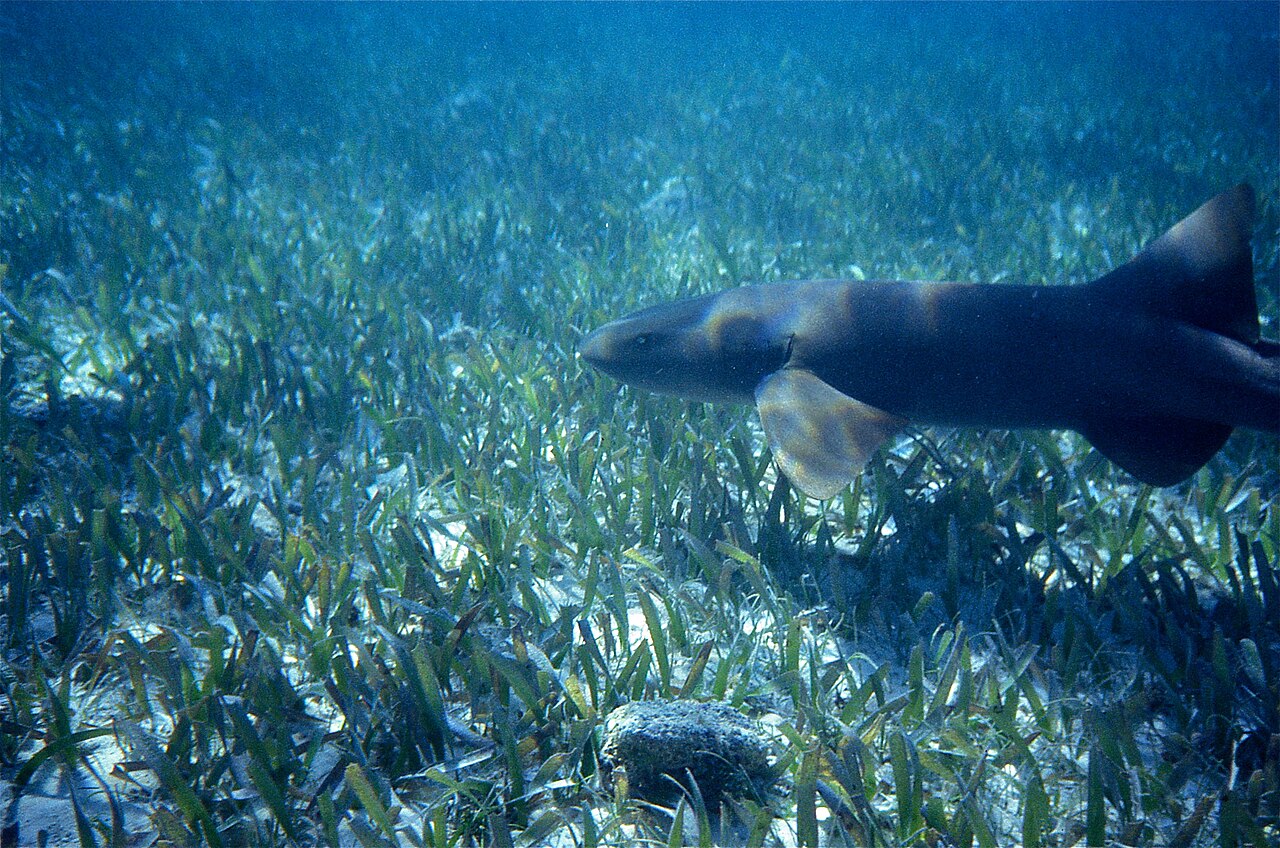
The nurse shark occupies a broad yet fragmented range across three ocean basins. In the Eastern Atlantic, its distribution stretches from the Cape Verde archipelago southward to Gabon, with occasional strays recorded as far north as the coast of France. Along the Western Atlantic and Caribbean, it is found from Rhode Island down to southern Brazil, while in the Eastern Pacific its range extends from Baja California to Peru. Despite this wide footprint, the species is typically inshore and bottom-dwelling, favoring warm coastal waters rather than open ocean. Habitat preferences shift noticeably with age. Juveniles tend to linger on the seafloor of shallow coral reefs, seagrass meadows, and the tangled roots of mangrove islands, where their spotted coloration likely provides camouflage. As they mature and the spots fade into a uniform brownish tone, adults migrate toward deeper reef structures and rocky outcrops. During daylight hours they tuck themselves into crevices and beneath overhanging ledges, emerging only after dark to forage across shallower seabed. A rare genetic condition called piebaldism can produce a partial loss of body pigmentation, leaving a speckled pattern that sets affected individuals apart from their uniformly colored peers.
Suction, Solitude, and the Rhythm of the Reef
Nurse sharks are opportunistic nocturnal foragers that comb through bottom sediments in search of a varied menu: small fish such as stingrays and teleosts, a range of invertebrates including crustaceans, molluscs, sea urchins, tunicates, and anthozoans, and even algae. They are obligate suction feeders, generating forces among the highest ever recorded for any aquatic vertebrate. When a prey item is too large for their relatively small mouths, they may employ a suck-and-spit technique or shake their head vigorously to break it into manageable pieces. Behaviorally, nurse sharks are strikingly sedentary compared to most shark relatives. They exhibit strong site fidelity, a trait common among reef-associated species, and are among the very few sharks documented to return to the same breeding grounds repeatedly. By day they often cluster in large, sedentary groups, yet at night they disperse to feed as solitary individuals. In certain coastal habitats, American alligators and American crocodiles have been recorded as occasional predators, with photographic evidence and historical accounts confirming that encounters between these species are not rare where their ranges overlap.
Biennial Cycles and the Puzzle of Multiple Fathers
Nurse sharks reproduce through ovoviviparity, meaning fertilized eggs develop and hatch entirely within the mother's body. Their reproductive cycle is biennial: a female may require up to eighteen months to produce a new clutch of eggs. The mating window is brief, running from late June through the end of July, after which a six-month gestation period follows. Litters typically contain between twenty-one and twenty-nine pups, each born fully formed at roughly thirty centimeters in length. Perhaps the most genetically intriguing aspect of their reproduction is multiple paternity. A decade-long genetic study revealed that a single brood could carry more distinct genotypes than would be expected from a single father. In one examined litter, fourteen separate genotypes were identified, strongly indicating that more than one male had fertilized the mother's eggs during the short mating season. This practice of multiple paternity serves to promote genetic variation within the population, a potential advantage for a species that is vulnerable on the IUCN Red List and faces pressures from both targeted fisheries and by-catch across much of Central America and the Caribbean.
Common Misconceptions (Editorial)
- Some people believe the name "nurse shark" refers to the species caring for its young; in fact, the name likely originated from old terms for dogfish or from a misinterpretation of the shark giving "nurse" due to its ovoviviparous reproduction, not from actual nursing behavior. - It is a common misconception that nurse sharks are sluggish predators that rely on biting; however, they are obligate suction feeders that generate some of the highest suction forces recorded among aquatic vertebrates and use suck-and-spit or head-shaking techniques to process food.
Why It Matters (Editorial)
The nurse shark endures as a critical species for marine research because its tolerance for capture and handling allows scientists to study shark biology in ways that are difficult with more fragile species. Its recent global vulnerable status underscores the need for sustainable fisheries management, even as its resilience in U.S. and Bahamian waters offers a hopeful model for conservation success in other regions.
Gallery
Frequently Asked Questions
What is the Nurse shark and what family does it belong to?
The Nurse shark (Ginglymostoma cirratum) is a bottom-dwelling elasmobranch that makes up the entire family Ginglymostomatidae. It's a sturdy, slow-moving species found in warm coastal waters across the western Atlantic and Caribbean.
How big do Nurse sharks get and how do they reproduce?
Adults can reach roughly 3.08 m (about 10½ ft), while newborns are only around 30 cm. Females carry litters of 21–29 pups for about six months, with mating typically occurring between late June and the end of July.
What is the Nurse shark's global conservation status?
The IUCN lists the species as Vulnerable worldwide, though populations in the United States and The Bahamas are rated Least Concern. The western Atlantic is classified as Near Threatened, reflecting pressure from fisheries in South America, Central America, and the Caribbean.
Why is the Nurse shark considered important for shark research?
Its robust build and tolerance for capture and handling make it a go-to species for laboratory and field studies. Researchers can work with it repeatedly without the extreme stress responses seen in more fragile shark species.
Are Nurse sharks targeted by commercial fisheries?
Yes—they are directly harvested in some regions and also end up as by-catch in other fisheries. This fishing pressure is one of the factors behind their Vulnerable global status, particularly in parts of South America and the Caribbean.
More in Sharks 1-22
Spotted an error? Know more?
This is a living reference — every entry is fact-audited, and reader corrections feed straight into our audit queue. Suggest an edit · See this site's audit record