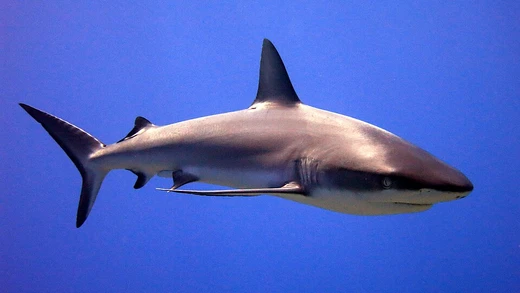
Hammerhead shark
Sharks with distinctive hammer-shaped heads found in warm coastal waters.

Eden, Janine and Jim from New York City · CC BY 2.0
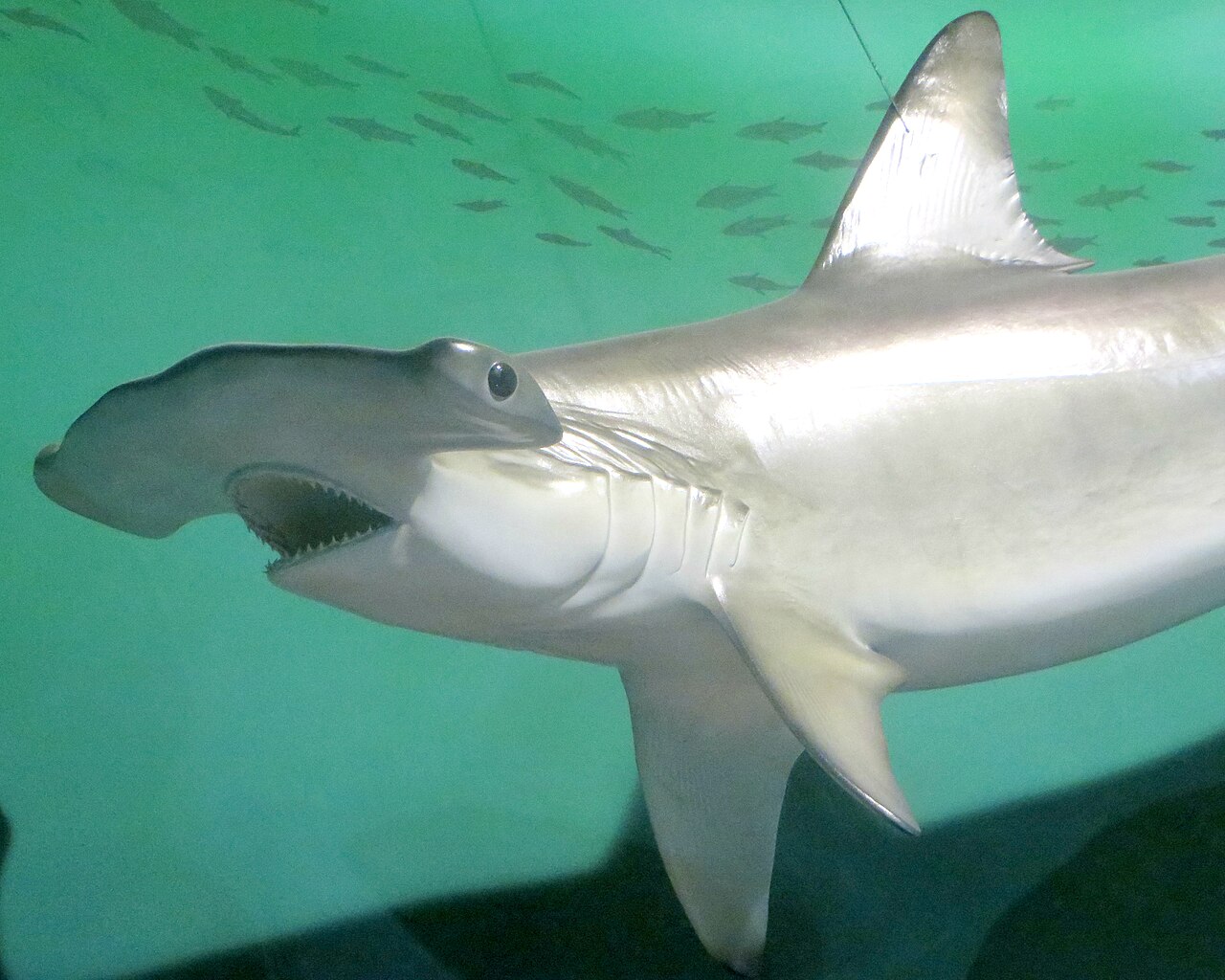
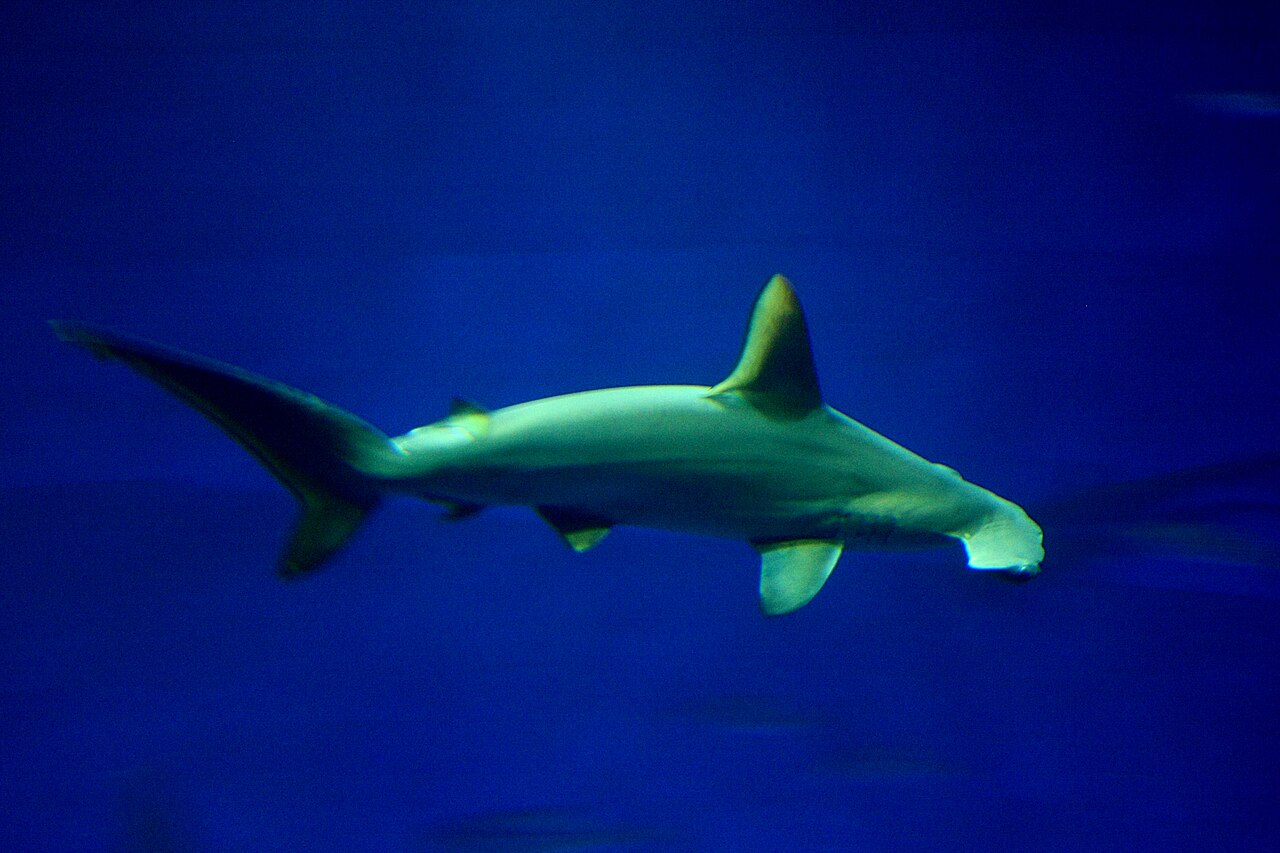
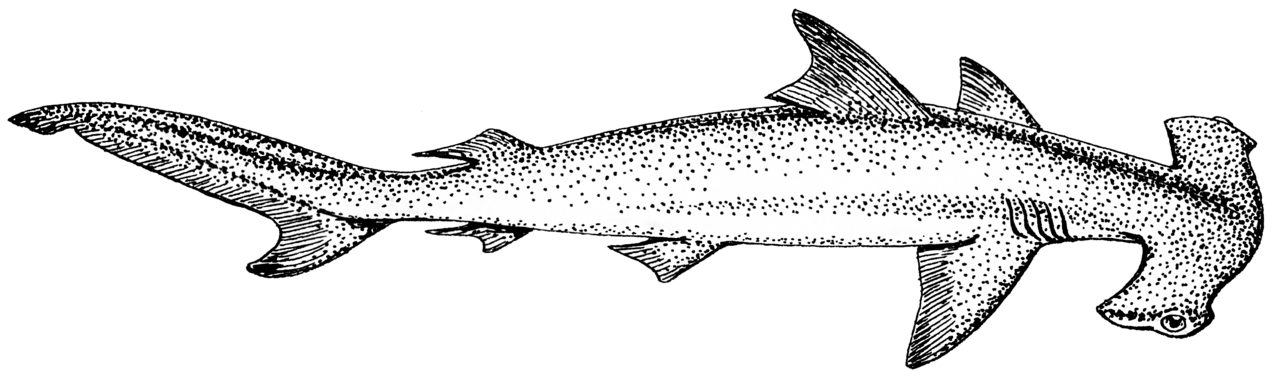
The hammerhead sharks are a group of sharks forming the family Sphyrnidae, named for the unusual and distinctive form of their heads, which are flattened and laterally extended into a cephalofoil (a T-shape or 'hammer'). Most hammerhead species are placed in the genus Sphyrna, while the winghead shark is placed in its own genus, Eusphyra. They are found worldwide, preferring life in warmer waters along coastlines and continental shelves. Unlike most sharks, some hammerhead species will congregate and swim in large schools during the day, becoming solitary hunters at night.
- Number of species
- 9 extant species (8 in genus Sphyrna, 1 in genus Eusphyra)
- Reproduction
- Viviparous; frequency varies by species (some reproduce annually, others biennially or less); litters of 12–15 pups (great hammerhead: 20–40)
Lore & Background
Hammerhead sharks vary in length and weight. The largest species, the great hammerhead, has an average length of 13.1 feet and weight of 500 pounds. The smallest, the bonnethead shark, can reach 5 feet in length and 24 pounds. They are usually light gray with a greenish tint, and their bellies are white, allowing them to blend into the background when viewed from below. Their heads have lateral projections that give them a hammer-like shape, differing between species: a distinct T-shape in the great hammerhead, a rounded head with a central notch in the scalloped hammerhead, and an unnotched rounded head in the smooth hammerhead. Hammerheads have disproportionately small mouths compared to other shark species. Their closest relatives are the requiem sharks. Based on a recent combined molecular and paleontological study, the ancestor of the hammerheads probably lived in the Cretaceous or Paleocene, with definitive fossils dating back to the Eocene. Using mitochondrial DNA, a phylogenetic tree showed the winghead shark as sister to the rest of the hammerhead sharks, suggesting that the first ancestral hammerhead sharks also had large hammers. Reproduction frequency varies by species; some reproduce annually, others biennially or less. During mating, the male bites the female, a behavior common among sharks, though it is not a matter of 'agreement.' Fertilization is internal, and females give birth to live young. The developing embryos are sustained by a yolk sac, which transforms into a structure analogous to a mammalian placenta. Litters typically consist of 12 to 15 pups, except for the great hammerhead, which gives birth to 20 to 40 pups.
Reader's Guide
Hammerhead sharks are significant for their unique cephalofoil, which has been postulated to serve multiple functions including sensory reception, manoeuvering, and prey manipulation. The shape of the head may help in close-quarters maneuverability and sharp turning, though the unusual structure of their vertebrae has been found to be instrumental in making turns correctly. The cephalofoil also aids in hunting stingrays and flatfishes by pinning down and stunning prey. Hammerheads eat a large range of prey including fish, squid, octopus, and crustaceans, with stingrays a particular favorite. The great hammerhead occasionally engages in cannibalism. Bonnetheads have been found to feed on seagrass, making them potentially omnivorous. Most species are too small to inflict serious damage to humans. The great and scalloped hammerheads are listed as endangered, and the smalleye hammerhead as vulnerable, due to overfishing and demand for their fins. The practice of finning is lethal to the shark. The relatively small bonnethead is regular at public aquariums, while larger species are considered difficult to maintain in captivity.
Did You Know?
- The winghead shark has proportionately the largest 'hammer' of all hammerhead sharks.
- Hammerheads have electroreceptory sensory pores called ampullae of Lorenzini that detect electric fields.
- The bonnethead shark was the first shark known to be capable of asexual reproduction via automictic parthenogenesis.
- Bonnetheads have been found to feed on seagrass, making them potentially omnivorous.
The Cephalofoil: A Sensory Masterpiece
The most striking feature of any hammerhead is its flattened, laterally extended head, which spreads into a T-shaped structure known as a cephalofoil. This unusual architecture serves multiple purposes, though scientists continue to debate their relative importance. Binocular overlap and depth perception are also improved. Beyond sight, the widened head distributes electroreceptor pores—called ampullae of Lorenzini—over a broader surface, functioning somewhat like a larger radio antenna that sweeps for the faint electric fields emitted by nearby prey. Earlier theories emphasized the cephalofoil's role in tight turning and close-quarters maneuverability, but research into the species' vertebral structure suggests the spine does much of the turning work, with the head contributing secondary lift. The winghead shark, which bears the proportionately largest hammer in the group, hints that the earliest ancestral hammerheads already possessed broad, expansive heads.
Deep Roots: Taxonomy and Evolutionary Origins
Hammerheads belong to the family Sphyrnidae, a lineage whose closest living relatives are the requiem sharks. Because sharks lack mineralized skeletons, they fossilize extremely rarely; what survives in the rock record is almost always isolated teeth rather than complete bodies. This scarcity makes pinning down the family's origins difficult. A combined molecular and paleontological analysis places the common ancestor of all hammerheads in the Cretaceous or Paleocene epochs, while the oldest unambiguous fossil evidence dates to the Eocene. Earlier DNA-based estimates had pushed the family's origin to the Miocene, roughly twenty million years ago, but the newer integrated work pushes it further back. Phylogenetic trees built from mitochondrial DNA consistently position the winghead shark (genus Eusphyra) as the sister lineage to every other hammerhead in genus Sphyrna. Because the winghead carries the proportionally widest cephalofoil of the entire group, researchers infer that the very first ancestral hammerhead sharks already sported broad, hammer-like heads rather than evolving the shape gradually from a narrow-snouted ancestor.
Reproduction and the Parthenogenesis Surprise
Hammerhead sharks reproduce on an annual cycle, and the mating encounter itself is notably forceful: the male bites the female repeatedly and aggressively until she consents to pair. Fertilization is internal, with sperm transferred through a pair of claspers. The species are viviparous, meaning females carry developing embryos to term and deliver live young. Early embryonic life is sustained by a yolk sac; once that reserve is exhausted, the emptied sac restructures into a yolk-sac placenta—sometimes called a pseudoplacenta—through which the mother continues to supply nutrients until birth. Litters typically number twelve to fifteen pups, though great hammerheads produce litters of twenty to forty. After birth, no parental care follows; the newborns simply huddle together and drift toward warmer waters until they are large enough to fend for themselves. This made the bonnethead the first shark species confirmed capable of cloning itself.
Hunters of the Warm Shallows
Hammerheads inhabit warm coastal waters and continental shelves around the globe, favoring tropical and subtropical regions. Their coloration—a pale gray-green back fading to a clean white belly—provides effective counter-illumination, making them nearly invisible to prey scanning upward from the seafloor. During daylight hours, several species gather into large, loosely coordinated schools; as evening falls, they disperse into solitary hunters. Their diet spans a wide range: bony fish, other sharks, squid, octopus, and crustaceans all feature on the menu, but stingrays and flatfishes are particular favorites. The comparatively small, crescent-shaped mouth sits directly beneath the cephalofoil, perfectly positioned for ambushing seafloor dwellers. When targeting rays or flounders, a hammerhead will press its broad head down onto the prey, pinning and briefly stunning it before delivering the killing bite. The great hammerhead, the largest member of the family at an average of thirteen feet and five hundred pounds, is noted for being more aggressive toward its own kind than smaller relatives. In summer, populations undertake mass migrations in search of cooler waters.
Common Misconceptions (Editorial)
A common misconception is that hammerhead sharks are aggressive toward humans due to their intimidating appearance; however, the facts do not provide any information on their behavior toward humans, so this cannot be corrected here. Another misconception is that hammerhead sharks reproduce through egg-laying, but the facts confirm they are viviparous, giving birth to live young after internal fertilization. Some believe the hammerhead’s “hammer” is primarily for ramming prey, but the facts instead highlight its use of electroreceptory pores (ampullae of Lorenzini) on the cephalofoil to detect electric fields.
Why It Matters (Editorial)
Hammerhead sharks endure in public fascination largely because of their alien-looking cephalofoil, a feature that remains a powerful symbol of evolutionary adaptation in marine life. Their ability to form large daytime schools and their complex reproductive strategies remind us that even familiar predators hold surprising biological secrets worth protecting.
Gallery


Frequently Asked Questions
What is a hammerhead shark?
Hammerhead sharks are a group of nine living species in the family Sphyrnidae, instantly recognizable by their flattened, T-shaped heads known as a cephalofoil. Eight of these species belong to the genus Sphyrna, while the winghead shark sits in its own genus, Eusphyra.
What makes hammerhead sharks unique compared to other sharks?
Their laterally extended, hammer-shaped head gives them a silhouette no other shark family shares. They also differ in social behavior, as some species gather into large daytime schools before splitting up to hunt alone at night.
How do hammerhead sharks reproduce?
All hammerhead species are viviparous, giving birth to fully formed live young rather than laying eggs. Litter sizes typically range from 12 to 15 pups, though great hammerheads can produce 20 to 40 at once, and the interval between births varies from yearly to every other year or longer depending on the species.
Where can you find hammerhead sharks?
They are distributed across the world's oceans but strongly favor warmer coastal waters and continental shelves. You are most likely to encounter them in tropical and subtropical regions rather than in cold, deep open water.
How many species of hammerhead shark exist?
There are nine extant hammerhead species in total. Eight are classified under the genus Sphyrna, and one—the winghead shark—occupies its own separate genus, Eusphyra.
More in Sharks 1-22
Spotted an error? Know more?
This is a living reference — every entry is fact-audited, and reader corrections feed straight into our audit queue. Suggest an edit · See this site's audit record