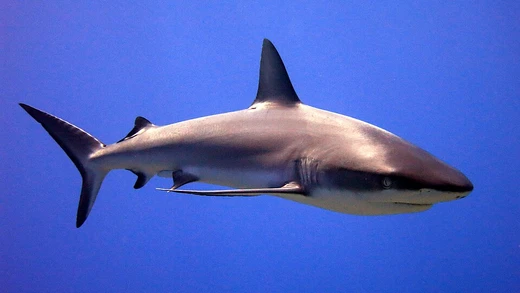
Bull shark
A euryhaline requiem shark known for aggression and freshwater tolerance.

Sylke Rohrlach from Sydney · CC BY-SA 2.0
The bull shark (Carcharhinus leucas), also known as the Zambezi shark in Africa and Lake Nicaragua shark in Nicaragua, is a species of requiem shark found worldwide in warm, shallow waters along coasts and in rivers. It is notable for its aggressive nature and its ability to thrive in both salt and fresh water, making it one of the few cartilaginous fishes reported in freshwater systems. Bull sharks are listed as vulnerable on the IUCN Red List, with populations continuing to decrease due in part to shark-culling efforts near beaches.
- maximum_recorded_length
- 3.4 m (11.2 ft), with unconfirmed reports up to 4.0 m
Lore & Background
The bull shark is large and stout, with females larger than males. At birth, it can be up to 81 cm in length. Its name derives from its stocky shape, broad flat snout, and aggressive, unpredictable behavior. In Africa it is commonly called the Zambezi River shark or 'zambi'; other local names include Fitzroy Creek whaler and Lake Nicaragua shark.
Reader's Guide
The bull shark is significant for its unique osmoregulatory abilities, allowing it to inhabit both salt and freshwater environments. It is diadromous and euryhaline, quickly adapting to a wide range of salinities. This species has been found far up rivers, including the Mississippi River as far as Alton, Illinois, and the Amazon River to Iquitos, Peru. Its aggressive nature makes it responsible for a large portion of nearshore shark attacks, though few freshwater interactions with humans have been recorded. The bull shark's closest living relatives, such as the sandbar shark, lack osmoregulation capabilities, suggesting convergent evolution with river sharks of the genus Glyphis. Its earliest fossil teeth date to the Early Miocene of Egypt and Peru.
Did You Know?
- Bull sharks have been known to travel up the Mississippi River as far as Alton, Illinois, about 1,100 km from the ocean.
- Bull sharks are listed as vulnerable on the IUCN Red List due to ongoing population decreases.
Physiology & the Freshwater Frontier
The bull shark's most remarkable physiological trait is its euryhaline capacity—its ability to regulate internal salt balance and thrive in both marine and freshwater environments. This sets it apart from many close relatives within the Carcharhinus genus, including the sandbar shark, which lacks such osmoregulatory capability. Interestingly, the river sharks of the genus Glyphis share a similar freshwater tolerance, yet taxonomic analysis places them as sister to Lamiopsis rather than within Carcharhinus. This suggests the two lineages independently evolved comparable physiologies through convergent evolution. The bull shark's freshwater range is staggering: it has been documented traveling up the Mississippi to Alton, Illinois, roughly 1,100 kilometres from the ocean, and as far as 4,000 kilometres up the Amazon to Iquitos in Peru and north Bolivia. It inhabits Lake Nicaragua, the Ganges and Brahmaputra rivers in eastern India and Bangladesh, and the Tigris River as far as Baghdad. Despite these extraordinary ranges, it is not a true freshwater species in the way Glyphis sharks are.
Anatomy, Size & Bite Force
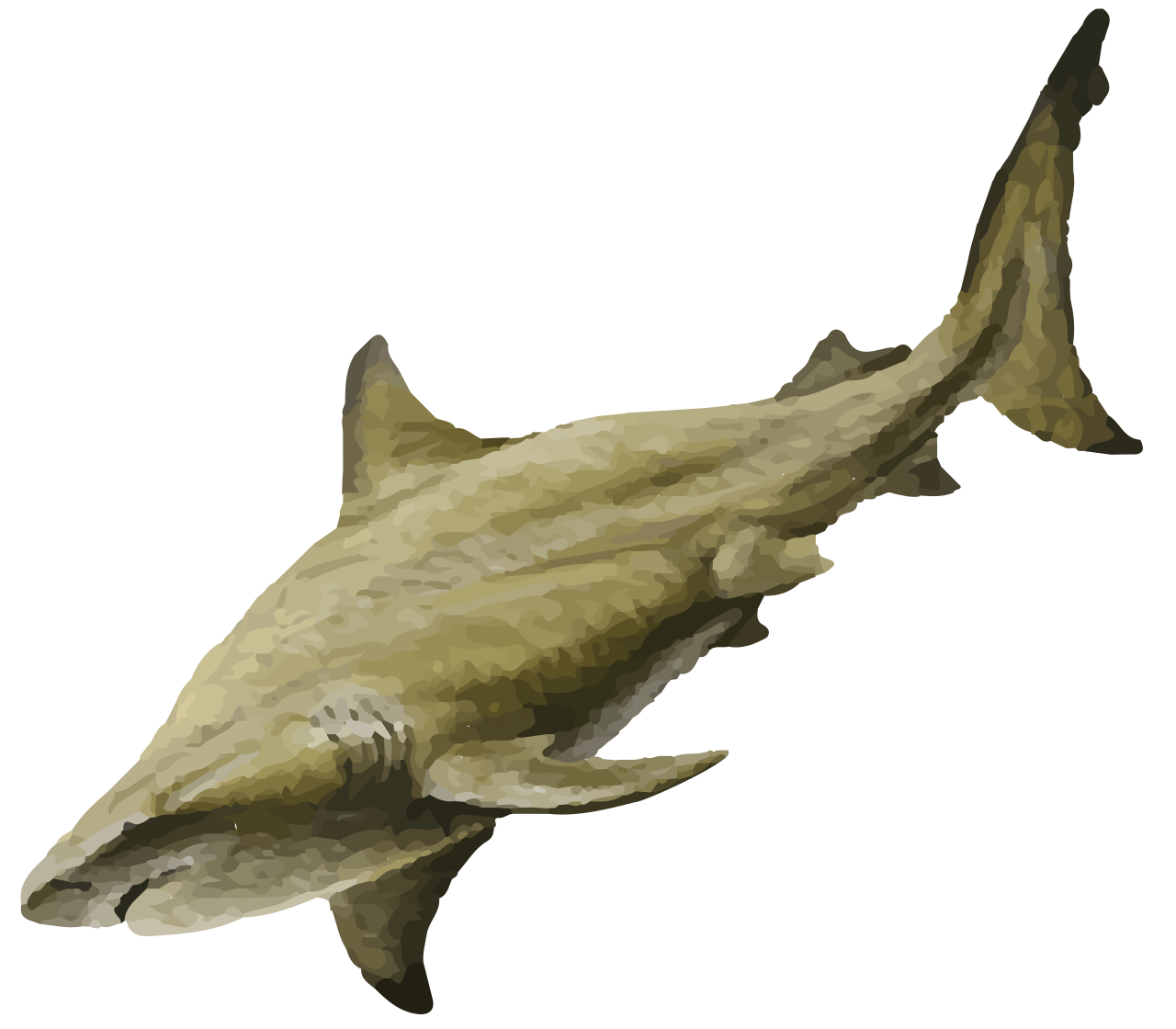
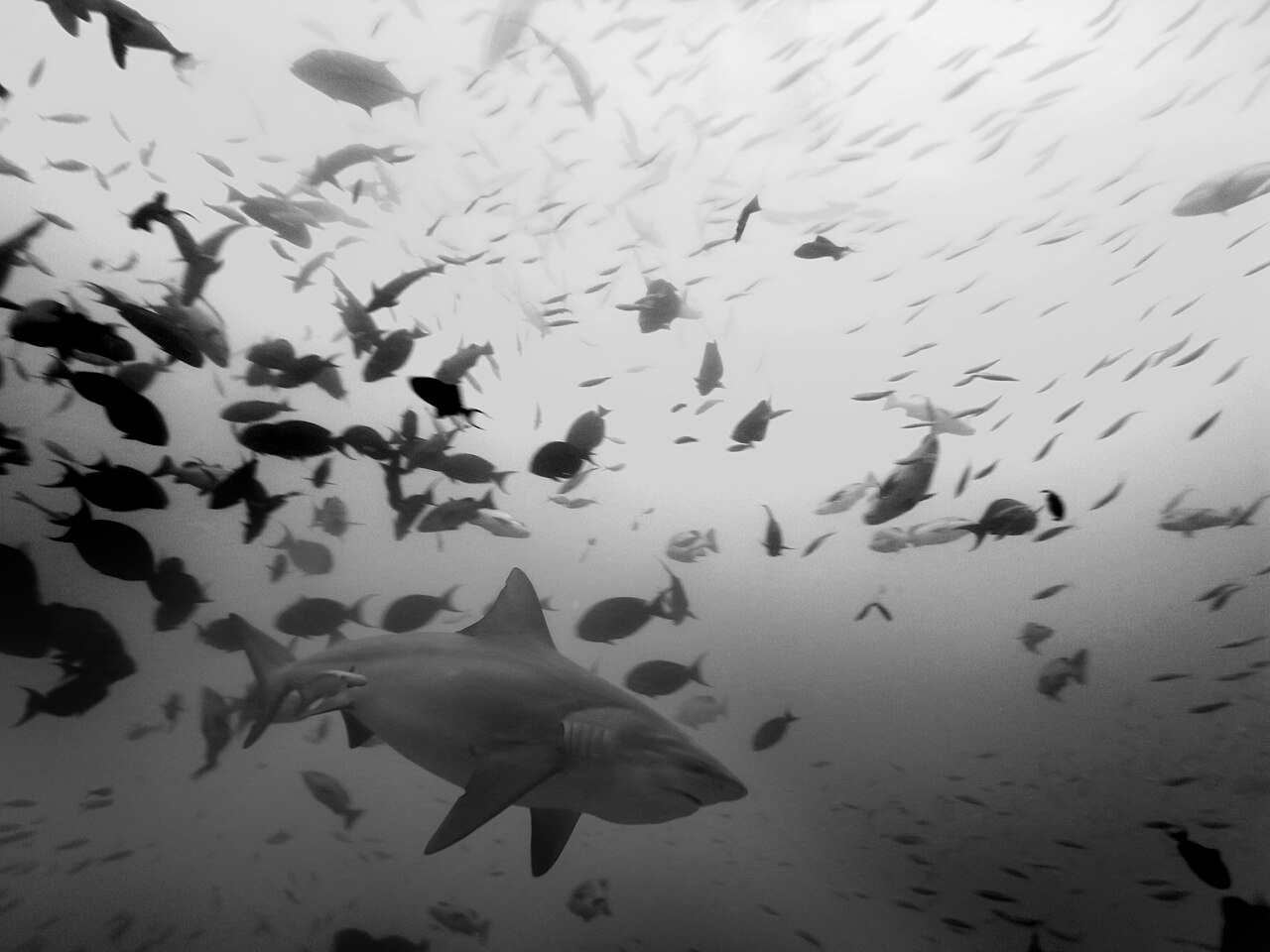
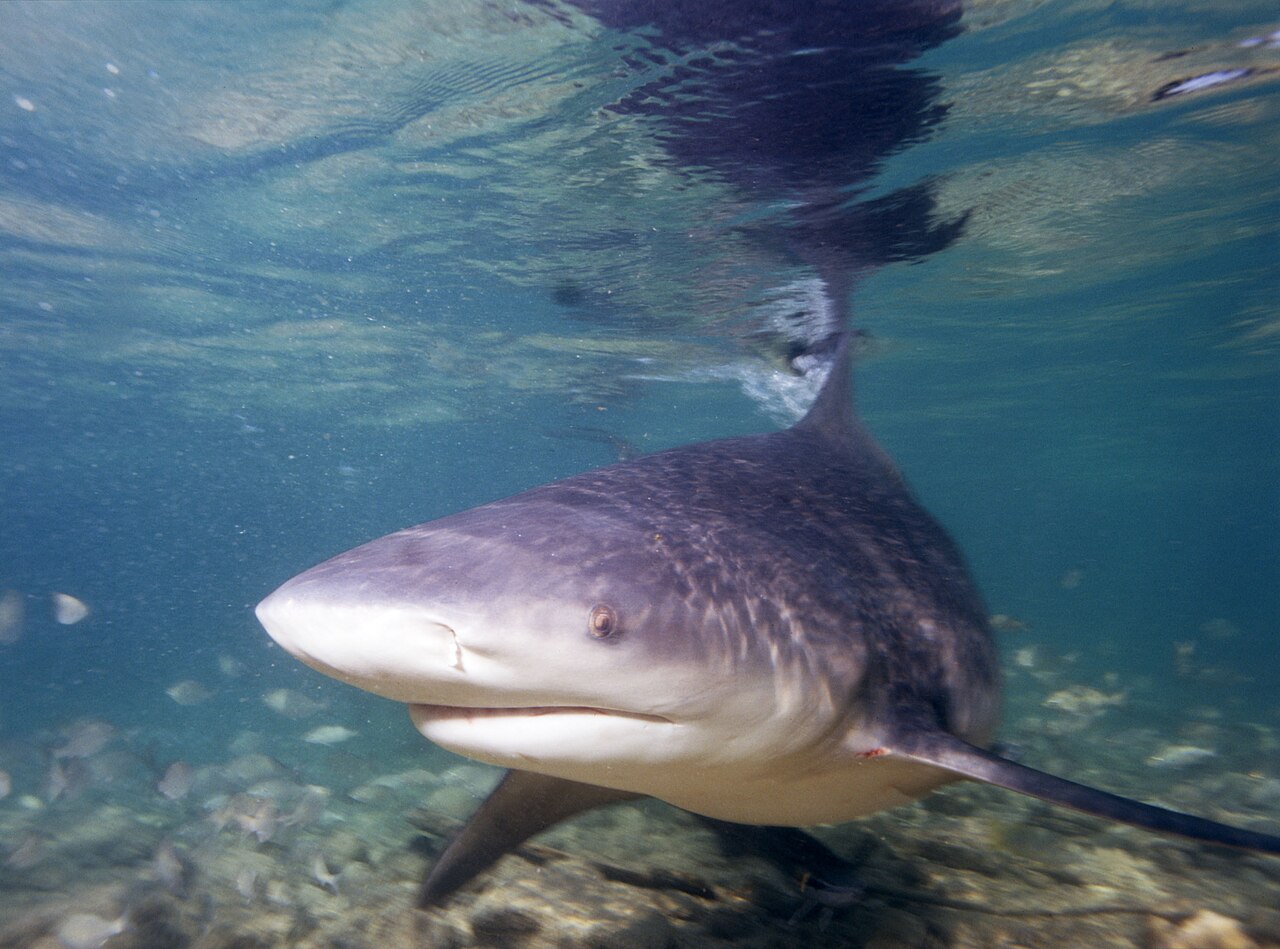
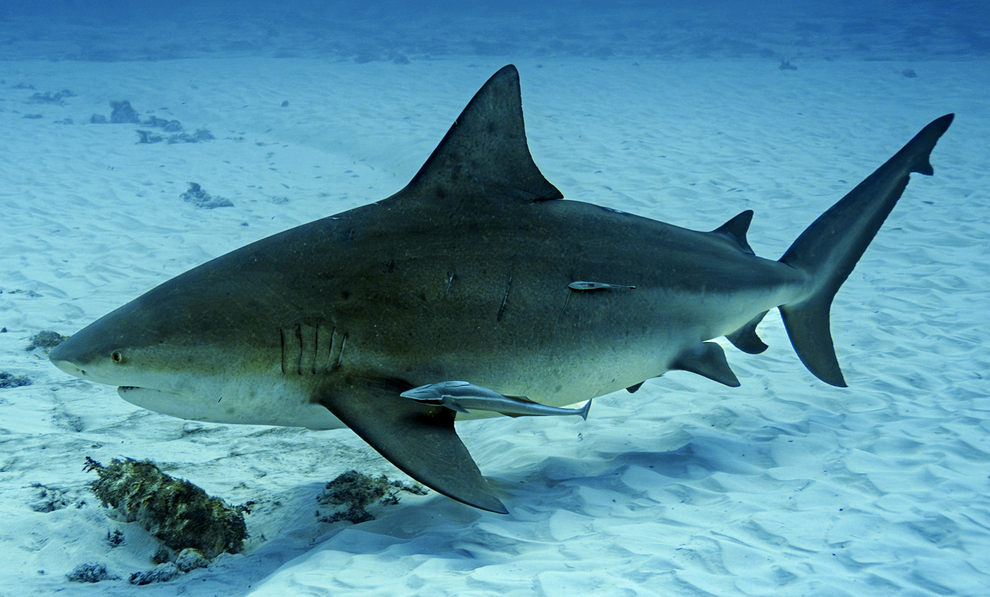
Bull sharks are notably stocky and broad-bodied compared to other requiem sharks of similar length, with a wide, flat snout and a grey dorsal surface contrasting a white underside.
Global Range & Habitat Versatility
The bull shark occupies an extraordinarily broad geographic footprint across warm coastal waters worldwide. In the Atlantic, its range stretches from Massachusetts down to southern Brazil and from Morocco to Angola. In the Pacific, it spans from Baja California to Ecuador. Beyond open ocean, it penetrates estuaries, rivers, and lakes wherever water is deep enough. A large specimen was caught in Scarborough canals near Moreton Bay, and greater numbers populate Gold Coast waterways. In warmer months, they frequent Sydney Harbour. The species shows a clear preference for warm ocean currents.
Conservation Pressure & Human Conflict
The bull shark's reputation for aggression and unpredictability has made it a persistent target of coastal management. Its stocky build, broad snout, and tendency toward confrontational behaviour near shorelines have driven ongoing culling programmes in beach areas to protect beachgoers. These removals are cited as one of the causes of the species' continuing population decline. The IUCN Red List currently classifies the bull shark as vulnerable. Larger individuals are implicated in a significant proportion of nearshore shark attacks, and because many attacks involve unidentified species, the bull shark's true role in human conflicts may be underreported. Despite its formidable reputation, freshwater encounters with humans remain rare. The species' wide distribution and numerous local names—from 'zambi' in Africa to 'Lake Nicaragua shark' to 'Fitzroy Creek whaler' in Australia—reflect both its global reach and the deep cultural entanglement between this predator and the communities that share its waters.
Common Misconceptions (Editorial)
1. Some people think bull sharks are primarily freshwater fish, but they are actually a species of requiem shark found worldwide in warm, shallow coastal waters, with the ability to enter freshwater rather than living in it exclusively.
2. A common belief is that the bull shark’s name refers only to its aggressive behavior, but it also derives from its stocky shape and broad, flat snout.
Why It Matters (Editorial)
The bull shark’s ability to thrive in both salt and fresh water makes it a unique and formidable predator, underscoring the adaptability of marine life in changing environments. Its vulnerable status on the IUCN Red List and ongoing population declines due to culling near beaches highlight the human impact on even the most resilient species, reminding us of the delicate balance between coastal safety and conservation.
Gallery
Frequently Asked Questions
Who is Bull shark?
The bull shark (Carcharhinus leucas) is a requiem shark that ranges across warm coastal zones and river systems on every continent. Locals in Africa call it the Zambezi shark, while in Central America it's known as the Lake Nicaragua shark.
What are Bull shark's powers/role?
Bull sharks are euryhaline, so they can osmoregulate in both seawater and freshwater—a rare ability among cartilaginous fishes. They also carry a reputation for being notably aggressive and bold compared to many other requiem sharks.
How does Bull shark's story end?
Bull sharks are currently classified as vulnerable on the IUCN Red List, and their global populations are still declining. A significant driver of that decline is reactive culling of sharks near beaches after attacks.
Why is Bull shark important?
Because it is one of the few shark species confirmed to inhabit freshwater, the bull shark serves as a keystone predator in both marine and riverine food webs. Its presence in estuaries and inland lakes makes it a useful indicator of overall ecosystem health.
How big does Bull shark get?
The largest scientifically verified individual measured roughly 3.4 metres (about 11.2 feet) in total length. Unconfirmed anecdotes claim specimens up to 4.0 metres, but no peer-reviewed record backs those figures.
More in Sharks 1-22
Spotted an error? Know more?
This is a living reference — every entry is fact-audited, and reader corrections feed straight into our audit queue. Suggest an edit · See this site's audit record