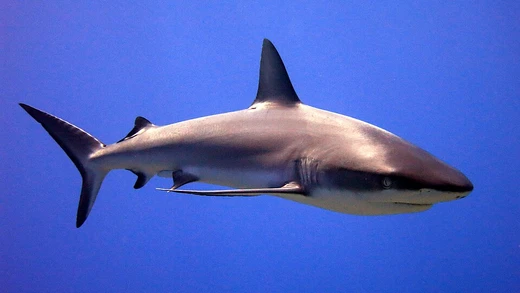
Shortfin mako
Fastest shark species, reaching 74 km/h in bursts.

出羽雀台 · CC BY-SA 4.0
The shortfin mako shark (Isurus oxyrinchus), also known as the shortfin mako, blue pointer, or bonito shark, is a species of large mackerel shark. The species is classified as Endangered by the IUCN.
- Scientific name
- Isurus oxyrinchus
- Maximum speed
- 74 km/h (46 mph)
- Maximum length
- 4.45 m (14.6 ft) verified
- Conservation status
- Endangered (IUCN)
- Family
- Lamnidae
- Distinguishing feature
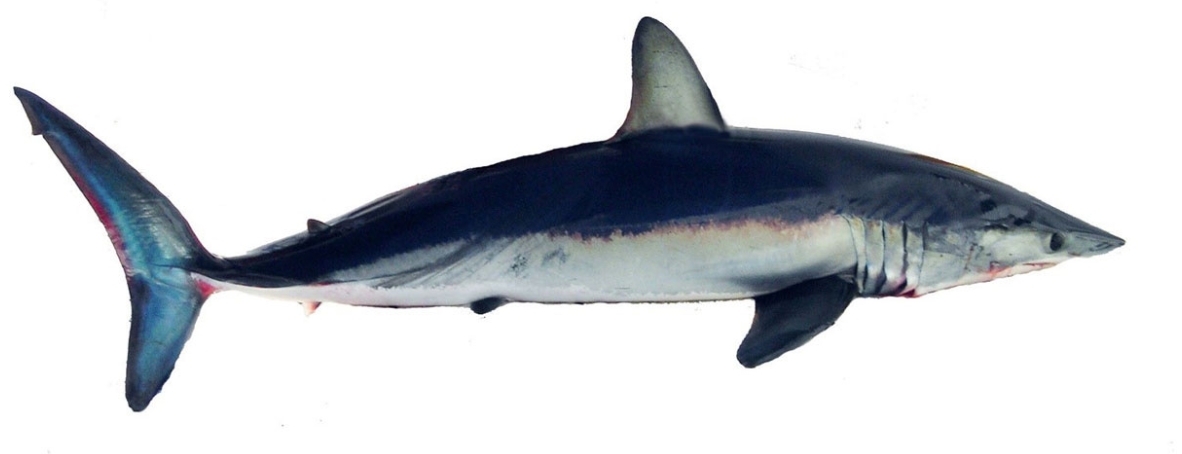
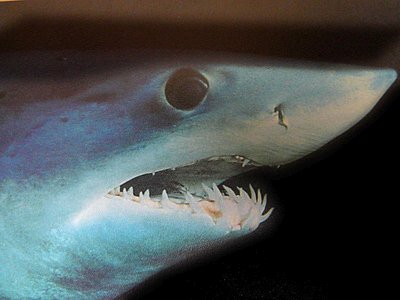
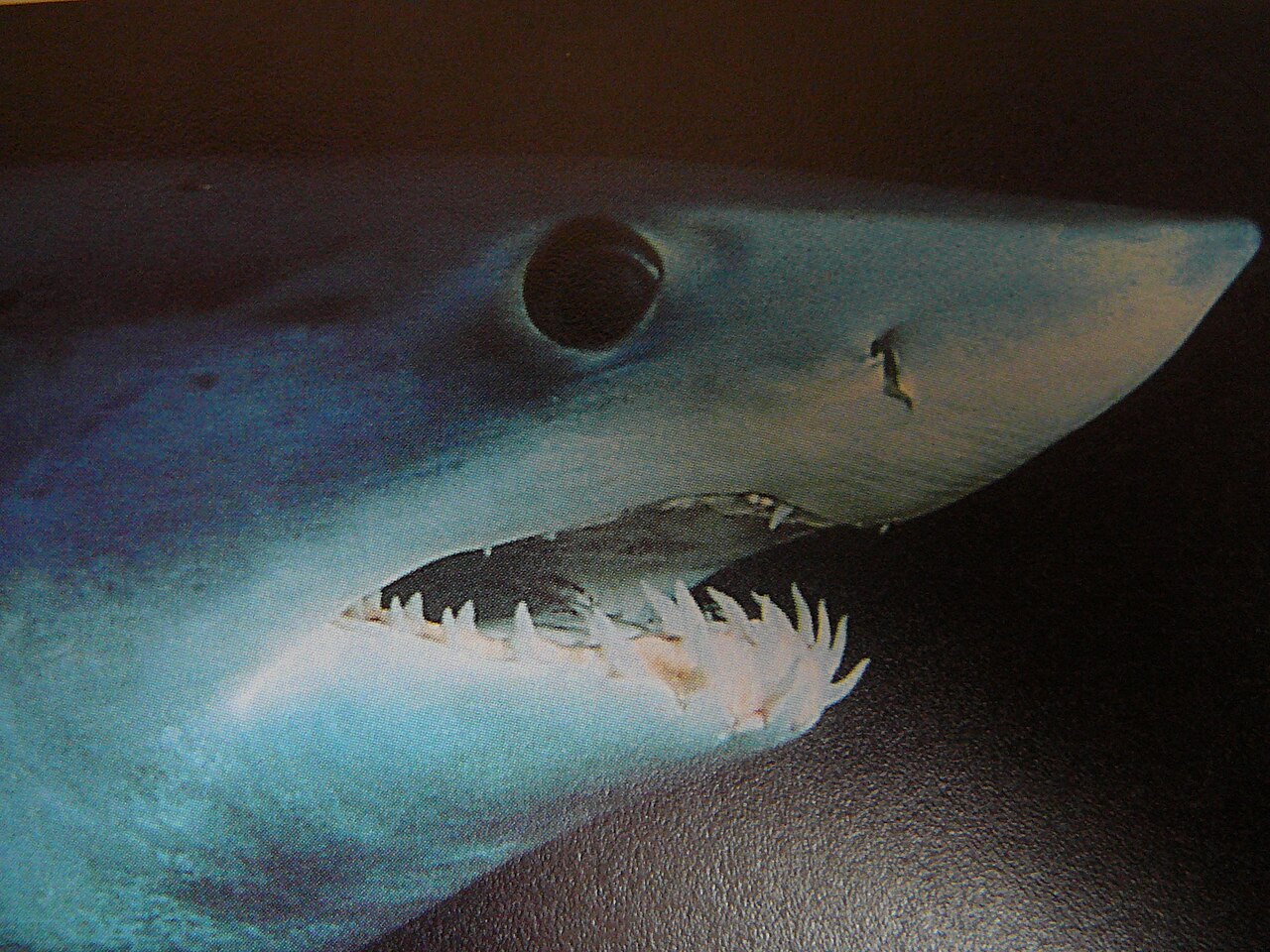
- Single lateral keel on tail; pointed snout
Lore & Background
The name 'mako' comes from the Māori language, meaning either the shark or a shark tooth. The shortfin mako is one of two extant species in the genus Isurus, along with the longfin mako (Isurus paucus), and one of five extant species in the family Lamnidae, which also includes the great white shark, porbeagle, and salmon shark. Fossil teeth of the shortfin mako are known as far back as the Late Oligocene of Germany, and later appear in formations throughout Europe, the United States, Japan, Chile, and Africa. The shortfin mako is a cosmopolitan pelagic species, inhabiting offshore temperate and tropical seas worldwide. It is one of the very few known endothermic sharks, though it is seldom found in waters colder than 16 °C (61 °F). The species is sexually dimorphic, with females typically larger than males.
Reader's Guide
The shortfin mako shark is significant as the fastest known shark species, with burst speeds of 74 km/h (46 mph), and as a top predator in pelagic ecosystems. Its diet includes squid, bony fish such as bluefish, mackerel, tuna, and billfish, as well as other sharks, porpoises, dolphins, sea turtles, seabirds, and crustaceans. The species consumes 3% of its weight each day and digests an average meal in about 1.5–2.0 days. The shortfin mako is classified as Endangered by the IUCN, reflecting threats from overfishing and bycatch. The species is also notable for its countershading coloration, with brilliant metallic blue dorsally and white ventrally, and for a unique color form known as 'marrajo criollo' thought to be endemic to the waters of the Azores.
Did You Know?
- The shortfin mako is the fastest known shark species, reaching speeds of 74 km/h (46 mph) in bursts.
- The name 'mako' comes from Māori, meaning either the shark or a shark tooth.
Speed and Hydrodynamic Design
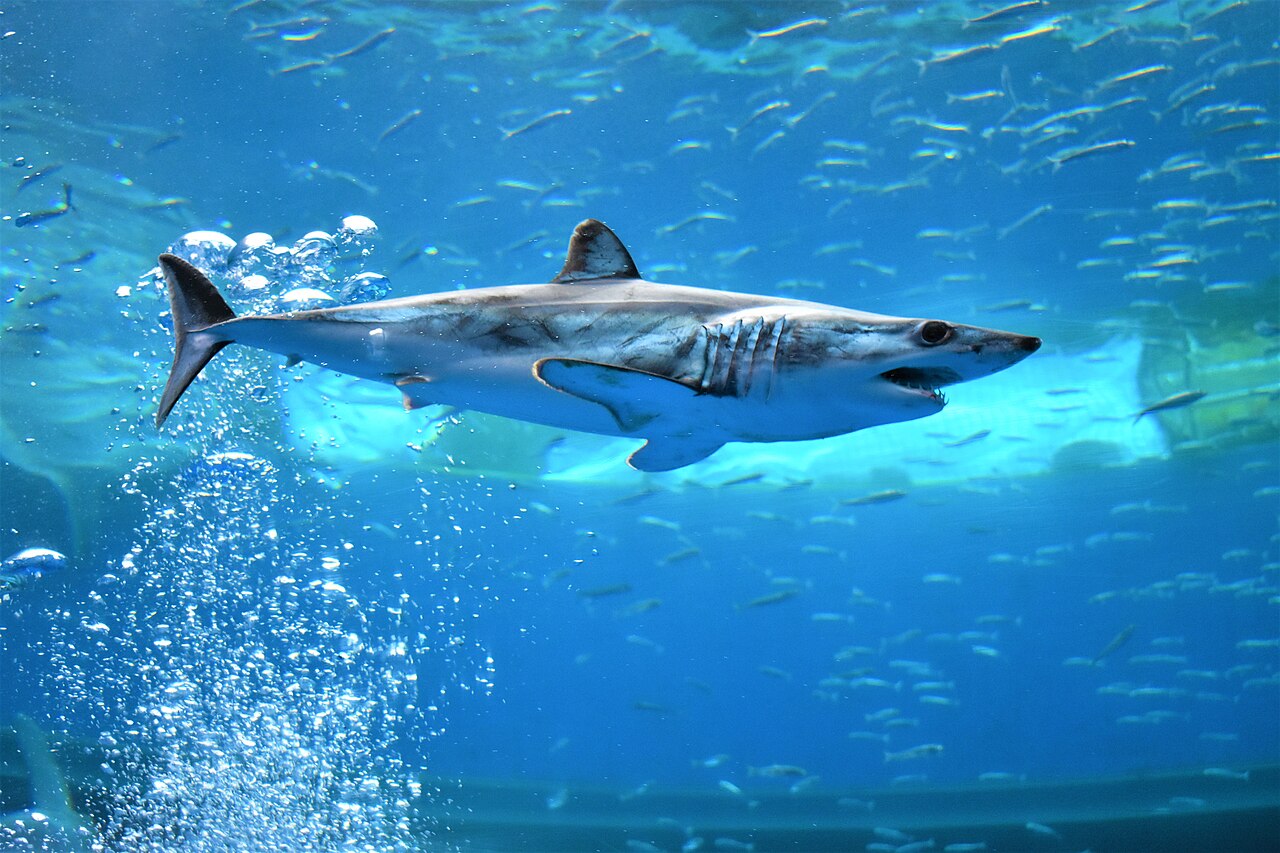
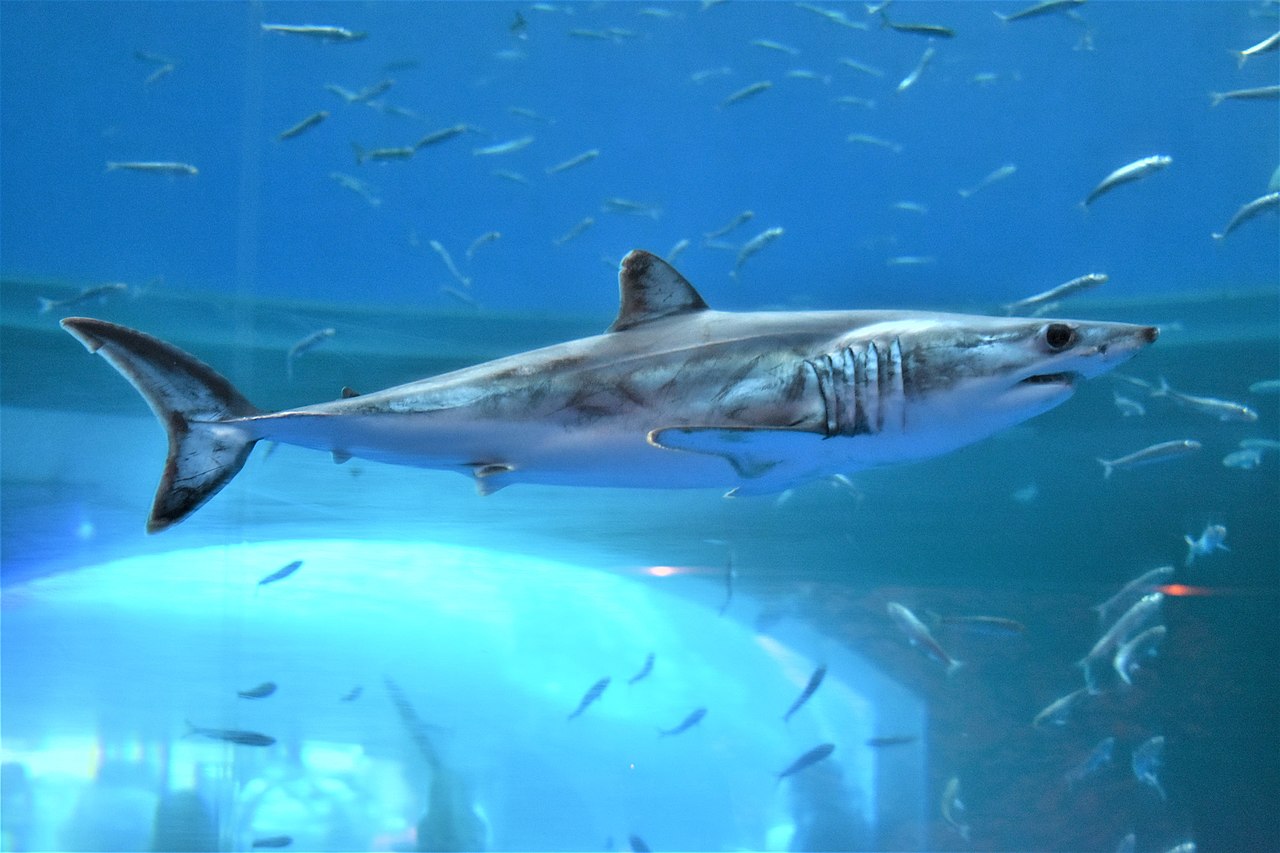
The shortfin mako holds the title of the fastest known shark, capable of sustaining cruising speeds around 50 km/h and unleashing bursts that top out near 74 km/h. This extraordinary velocity is no accident of biology; it is the product of a body sculpted for efficiency. The shark's fusiform silhouette tapers into a vertically elongated caudal fin whose two lobes sit at roughly equal size, while a single, highly pronounced lateral keel runs along the tail's base to reduce drag. Blunt triangular dorsal and pectoral fins add stability without sacrificing streamlining. The metallic blue dorsal surface fading sharply to a white belly provides countershading that conceals the animal from both above and below in open water. Juveniles carry a distinctive dark stain on the snout tip, and a rare mottled variant called the "marrajo criollo" appears to be confined to Azorean waters. Together, these traits make the mako a purpose-built machine of the open ocean.
A Name Carried Across Oceans and Centuries
The word "mako" traces its roots to the Māori language, where it can mean either the shark itself or a shark tooth. In English usage the term functions as both singular and plural, a quirk inherited directly from Māori grammar. The name likely grew out of a broader Polynesian linguistic family: Kāi Tahu Māori speakers say makō, other Māori dialects use mangō, Samoan offers mago, Tahitian has ma'o, and Hawaiian uses mano.
Giants of the Pelagic Realm
The most extreme claim involves a shark caught off Marmaris, Turkey, in the late 1950s, estimated from photographs at between 5.7 and 6.19 meters; because no weight was recorded and the estimate relied on post-capture imagery, scientists urge caution. Growth rates in this species appear somewhat accelerated relative to other lamnids, and the shortfin mako remains one of only a handful of known endothermic sharks.
A Wanderer of Every Ocean
The shortfin mako is a truly cosmopolitan predator, ranging across offshore temperate and tropical seas on every continent. In the western Atlantic its range stretches from Argentina and the Gulf of Mexico all the way up to Browns Bank off Nova Scotia, and it ranks among the most commonly encountered sharks in New Zealand waters. Swordfish serve as useful population indicators because both species favor similar environmental conditions and the mako feeds on them. Despite this extraordinary mobility, the IUCN classifies the species as Endangered.
Common Misconceptions (Editorial)
One common misconception is that the great white shark is the fastest shark species; in fact, the shortfin mako holds that title, reaching speeds of 74 km/h (46 mph). Another is that all sharks are cold-blooded, but the shortfin mako is one of the very few known endothermic (warm-blooded) sharks.
Why It Matters (Editorial)
The shortfin mako endures as a symbol of oceanic power and evolutionary precision—its incredible speed and warm-blooded physiology make it a unique predator. Yet its status as Endangered by the IUCN underscores a sobering reality: even the ocean’s fastest shark cannot outpace the threats of overfishing and habitat loss. Understanding its biology and conservation need is essential to preserving one of the sea’s most remarkable hunters.
Gallery
Frequently Asked Questions
What is the Shortfin mako shark?
The Shortfin mako (Isurus oxyrinchus) is a large mackerel shark that goes by several common names, including blue pointer and bonito shark. It is a member of the family Lamnidae and is found across warm and temperate oceans.
How fast can a Shortfin mako swim?
It is the fastest known shark, capable of burst speeds around 74 km/h (46 mph). No other shark species has been documented matching that velocity.
What is the Shortfin mako's conservation status?
The IUCN lists the Shortfin mako as Endangered, signaling a high risk of population decline in the wild. It is one of the most threatened large shark species on the Red List.
What family does the Shortfin mako belong to?
It is classified in the family Lamnidae, the same group that contains other large, active mackerel sharks. Its scientific name, Isurus oxyrinchus, distinguishes it from the closely related longfin mako.
More in Sharks 1-22
Spotted an error? Know more?
This is a living reference — every entry is fact-audited, and reader corrections feed straight into our audit queue. Suggest an edit · See this site's audit record