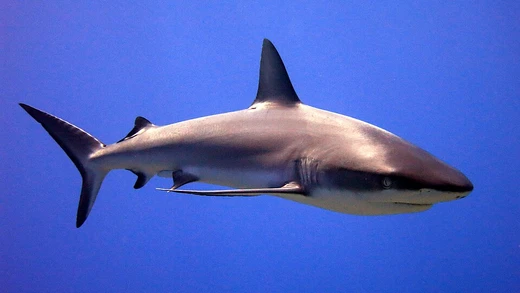
Blue shark
A widespread, migratory shark of temperate and tropical oceans.

The blue shark (Prionace glauca), also known as the great blue shark, is a species of requiem shark in the family Carcharhinidae that inhabits deep waters in temperate and tropical oceans worldwide. It is the only living species of the genus Prionace, though an extinct species, P. clarki, is known from Late Pliocene teeth in California. Averaging around 3.1 meters (10 feet) in length and preferring cooler waters, the blue shark is a highly migratory species listed as Near Threatened by the IUCN.
- Scientific name
- Prionace glauca
- Family
- Carcharhinidae
- Average length
- 3.1 m (10 ft)
- Gestation period
- 9–12 months
- Conservation status
- Near Threatened (IUCN)
Lore & Background
It prefers water temperatures between 12 and 20 °C but can tolerate a range from 3.9 to 31 °C. In the Atlantic, it undertakes regular clockwise migrations within prevailing currents. Blue sharks are viviparous with a yolk-sac placenta, giving birth after 9 to 12 months to litters that can number from 4 to over 100 pups. Females mature at five to six years, males at four to five years. They feed primarily on small forage fish and squid, though they can take larger prey. Predators include killer whales and larger sharks such as the tiger shark and great white shark. Their maximum lifespan is unknown but believed to be up to 20 years.
Reader's Guide
The blue shark is one of the most abundant pelagic sharks, yet it is listed as Near Threatened due to large numbers being caught as bycatch on longlines and nets. Its significance lies in its role as a widespread predator in oceanic ecosystems, helping regulate populations of small fish and squid. The species is also notable for its remarkable sensory adaptations, including electroreception via ampullae of Lorenzini, which allow it to detect weak electrical fields and navigate using the geomagnetic field. The blue shark's long-distance migrations, such as from New England to South America, highlight its importance in connecting marine regions. Its countershaded coloration—deep blue above and white below—is a classic adaptation for pelagic life. Despite being generally lethargic, blue sharks can move very quickly when needed. Their conservation status underscores the impact of industrial fishing on open-ocean species.
Did You Know?
- The earliest fossil teeth of the blue shark are known from the Miocene of Sri Lanka.
- Female blue sharks have skin three times thicker than males to withstand mating bites.
- Blue sharks can detect weak electrical fields and may use the geomagnetic field for navigation.
Common Misconceptions (Editorial)
1. Some people assume blue sharks are large, aggressive man-eaters, but they average around 3.1 meters (10 feet) in length and feed primarily on small forage fish and squid, not large mammals. 2. Another common misconception is that fossil evidence for the blue shark is ancient; in fact, the earliest known fossil teeth date only to the Miocene, not earlier periods like the Cretaceous. 3. Many believe blue sharks are a single widespread species with no extinct relatives, but an extinct species, P. clarki, is known from Late Pliocene teeth in California.
Why It Matters (Editorial)
The blue shark’s remarkable ability to tolerate a wide temperature range and migrate thousands of kilometers makes it a key indicator of ocean health. Its listing as Near Threatened by the IUCN underscores the pressure from fishing and bycatch, reminding us that even widespread species need conservation attention before decline becomes irreversible.
Frequently Asked Questions
What is a Blue shark?
The Blue shark (Prionace glauca) is a highly migratory requiem shark found in temperate and tropical oceans around the globe. It is the sole surviving member of the genus Prionace and belongs to the family Carcharhinidae.
What is the Blue shark's conservation status?
The IUCN currently lists the Blue shark as Near Threatened. Its broad migratory range across multiple ocean basins makes it especially vulnerable to bycatch and targeted commercial fishing.
Where do Blue sharks live?
They occupy deep waters across temperate and tropical oceans worldwide, showing a clear preference for cooler water temperatures. Their highly migratory behavior means they can turn up along virtually every continent's coastline.
More in Sharks 1-22
Spotted an error? Know more?
This is a living reference — every entry is fact-audited, and reader corrections feed straight into our audit queue. Suggest an edit · See this site's audit record