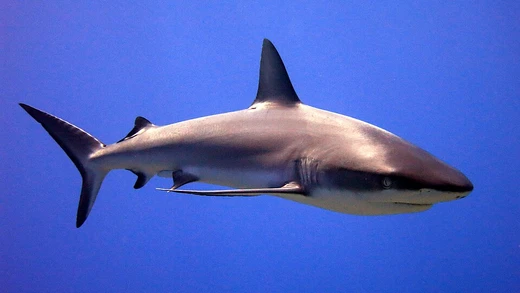
Oceanic whitetip
A slow-moving, opportunistic shark dangerous to shipwreck survivors.

The oceanic whitetip shark (Carcharhinus longimanus) is a large requiem shark inhabiting the pelagic zone of tropical and warm temperate seas. It is known for its stocky body and iconic elongated rounded fins with white tips. The species is typically solitary but may gather in large numbers at food concentrations. It is considered critically endangered by the IUCN Red List due to mounting fishing pressure for its fins and meat.
- Scientific name
- Carcharhinus longimanus (widely accepted); also Carcharhinus maou (first-published)
- Maximum length
- More than 4 m (13 ft)
- Typical length
- Up to 3 m (10 ft)
- Gestation period
- Nine months to one year
- Lifespan
- Up to 22 years
Lore & Background
The species epithet longimanus refers to the size of its pectoral fins, meaning 'long hands' in Latin. Fossil teeth of this species are known from the Early Miocene of Odisha, India, and from the Pliocene of Italy and Spain. The shark is found worldwide between 45°N and 43°S latitude in deep, open oceans with temperatures above 18 °C. Its diet consists mainly of pelagic cephalopods and bony fish, but it also eats stingrays, sea turtles, seabirds, and marine mammal carcasses. The species is viviparous, with females giving live birth after a gestation period of nine months to one year. During World War II, the oceanic whitetip was implicated in many deaths following the sinking of the RMS Nova Scotia and the USS Indianapolis.
Reader's Guide
The oceanic whitetip shark holds significant historical and ecological importance. It was once extremely common and widely distributed, but recent studies show steeply declining populations due to fishing pressure for its fins and meat. The species is now listed as critically endangered on the IUCN Red List. Its reputation as a danger to shipwreck survivors, particularly during World War II, has cemented its place in maritime lore. The shark's distinctive long, wing-like fins and white tips make it easily recognizable. Its slow-moving yet aggressive nature, combined with its opportunistic feeding habits, has made it a subject of both fear and fascination. The species' decline highlights broader issues of overfishing and the need for conservation of pelagic sharks.
Did You Know?
- The oceanic whitetip shark is also known as the brown shark, shipwreck shark, whitetip shark, or lesser white shark.
- The largest specimen ever caught measured more than 4 m (13 ft) in length.
- The species is viviparous, with embryos developing in utero and fed by a placental sac.
Common Misconceptions (Editorial)
A common misconception is that the oceanic whitetip shark is a fast, sleek predator like the great white, when in fact it has a stocky body and iconic elongated rounded fins. Another is that the species is always found alone, but while typically solitary, it may gather in large numbers at food concentrations. Some may also assume its name refers to fin markings alone, but the species epithet *longimanus* actually means "long hands" in Latin, referring to the size of its pectoral fins.
Why It Matters (Editorial)
The oceanic whitetip shark endures in public memory largely because of its infamous role in World War II shipwrecks, such as the sinkings of the RMS *Nova Scotia* and the USS *Indianapolis*, where it was implicated in many deaths. Today, its critically endangered status underscores the urgent need for conservation, as overfishing for its fins and meat continues to threaten a species that has roamed the world’s warm oceans since at least the Early Miocene.
Frequently Asked Questions
Who is Oceanic whitetip?
The oceanic whitetip (Carcharhinus longimanus) is a large requiem shark that patrols the open ocean across tropical and warm temperate seas. It is instantly recognizable by its stocky frame and the long, rounded fins that end in a pale white tip.
What are Oceanic whitetip's powers/role?
It is a slow-swimming, opportunistic hunter that operates in the pelagic zone and will sometimes form loose aggregations around a concentrated food source. Despite its unhurried pace, it is a genuine threat to shipwreck survivors stranded in open water.
How does Oceanic whitetip's story end?
The species is currently classified as critically endangered on the IUCN Red List. Sustained commercial fishing for its fins and meat is the primary driver pushing its populations toward collapse.
Why is Oceanic whitetip important?
As one of the larger open-ocean predators, it helps keep mid-level fish populations in check throughout the pelagic zone. Its rapid decline is also a warning sign that the broader tropical and temperate marine food web is under severe stress.
More in Sharks 1-22
Spotted an error? Know more?
This is a living reference — every entry is fact-audited, and reader corrections feed straight into our audit queue. Suggest an edit · See this site's audit record